Famous Photocopiers in History
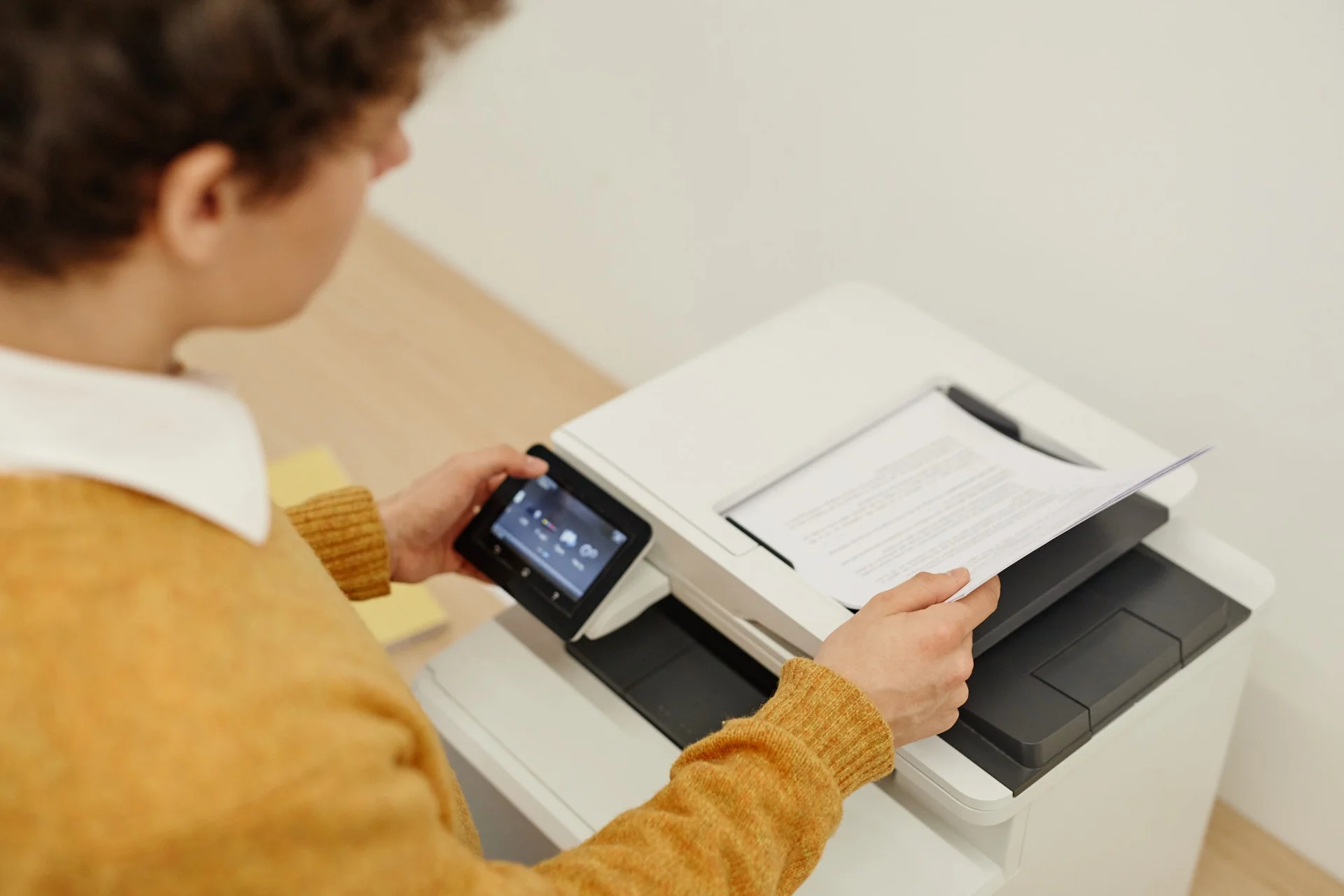
The history of photocopiers begins in the early 20th century, with inventions that would transform the way documents were reproduced. The first commercially marketed photocopier, the “Xerox 914”, was launched in 1959 by the Xerox company. This revolutionary device made it possible to reproduce documents in record time, rendering traditional printing methods obsolete.
Before that, inventors like Chester Carlson had already laid the foundations of photocopying with the development of the “xerography” technique in the 1930s. Carlson created a process that used an electrostatic charge to transfer ink onto paper, an innovation that would change the printing landscape. Other models also marked this period, such as the “Gestetner” and the “Roneo”, which were widely used in offices and educational establishments.
These early photocopiers were often bulky and required a certain level of expertise to operate correctly. However, their ability to produce copies quickly and at low cost soon won over businesses and institutions. These machines opened the way to a new era of written communication, where document duplication became accessible to everyone.
Summary
-
The first famous photocopiers in history:
-
The first photocopier, invented by Chester Carlson in 1938, revolutionised document reproduction.
-
The Xerox 914, launched in 1959, was the first commercially successful photocopier.
-
The revolutionary impact of the first photocopier on the business world:
-
The photocopier simplified and accelerated document reproduction, thus revolutionising the business world.
-
It also contributed to the rapid dissemination of information and the democratisation of access to documents.
-
Technological advances in photocopiers over time:
-
Photocopiers have undergone major advances, evolving from heavy, bulky machines to compact, multifunction models.
-
The integration of digital technology has enabled photocopiers to offer advanced features such as scanning and colour printing.
-
Iconic photocopiers in art history:
-
Some artists have used the photocopier as an artistic creation tool, exploring its aesthetic and conceptual possibilities.
-
The photocopier has been used in artistic movements such as Pop Art and concrete poetry.
-
Famous photocopiers in popular culture:
-
The photocopier has become a symbol of bureaucracy and office life, often represented in films, television series, and literature as a mundane yet omnipresent object.
The Revolutionary Impact of the First Photocopier on the Business World
The introduction of the Xerox 914 had a considerable impact on the business world. Before its arrival, document reproduction was a lengthy and expensive process, often limited to large companies with sufficient resources. With the photocopier, even small businesses could produce professional-quality copies in just a few minutes.
This enabled greater efficiency in document management, thus facilitating internal and external communication.** Additionally, the photocopier also fostered the rise of modern office culture.** Companies began adopting more collaborative working practices, where information sharing and rapid document dissemination became essential.
Photocopiers allowed teams to work together more efficiently by making information easily accessible. This evolution not only transformed how businesses operated but also contributed to the emergence of new business models based on speed and efficiency.
Technological Advances in Photocopiers Over Time
Over the decades, photocopiers have undergone significant technological advances. In the 1970s and 1980s, the introduction of laser technology marked a major turning point in the field of photocopying. Laser photocopiers offered superior print quality and reproduction speed unmatched by their predecessors.
This innovation allowed businesses to produce documents of exceptional clarity whilst reducing operating costs. With the advent of the digital era in the 1990s, photocopiers also evolved to incorporate digital features. Modern models now enable not only photocopying but also printing, scanning, and sending documents by email.
This convergence of technologies has transformed photocopiers into genuine document management centres within offices. Users can now manage their documents more efficiently, contributing to better organisation and reduced paper waste.
Iconic Photocopiers in Art History
Photocopiers have not been limited solely to the business world; they have also found their place in the artistic domain. Artists such as Robert Rauschenberg and Andy Warhol used photocopiers to create unique works of art. Rauschenberg, for example, explored the possibilities offered by photocopying to produce innovative collages that challenged traditional artistic conventions.
Warhol, for his part, integrated the photocopying technique into his creative process, using this tool to reproduce his famous silk-screen prints. These artists demonstrated that the photocopier could be a means of artistic expression in its own right, capable of transcending its utilitarian use to become an instrument of creation. This artistic use of the photocopier opened the way to a new form of contemporary art that continues to inspire artists today.
Famous Photocopiers in Popular Culture
In popular culture, photocopiers have also left their mark. From films to television series, these machines are often represented as symbols of bureaucracy or office efficiency. For example, in the film “Office Space”, the photocopier becomes almost a character in its own right, representing employees’ frustration with a monotonous and dehumanising work environment.
This humorous representation underlines the importance of the photocopier in our daily lives whilst criticising the excesses of the professional world. Additionally, photocopiers are often used as metaphors in various media to illustrate themes such as repetition, boredom, or even creativity. In some literary or cinematographic works, they are presented as tools that allow characters to reproduce their reality or explore their identity.
This duality between the utilitarian tool and the symbolic object testifies to the lasting cultural impact of photocopiers.
Famous Photocopiers in Literary and Cinematographic Works
Photocopiers have also found their place in literature and cinema as significant narrative elements.** In some contemporary novels, they are used to explore themes related to identity and memory.** For example, a character may use a photocopier to reproduce memories or important documents, thus highlighting the importance of collective and individual memory.
In cinema, films like “The Secret Life of Walter Mitty” highlight the role of the photocopier in the protagonist’s creative process. The character uses this tool to print images that inspire him in his quest for adventure and escape. These representations show how photocopiers can be perceived as catalysts of imagination and personal exploration.
Famous Photocopiers in Museum and Cultural Institution Collections
Many museums and cultural institutions have recognised the historical and artistic importance of photocopiers by integrating these machines into their collections. For example, the Museum of Modern Art (MoMA) in New York possesses several works of art created using photocopiers, thus testifying to their impact on the contemporary art world. These exhibitions allow visitors to explore the technological evolution of photocopiers whilst discovering their creative use by various artists.
Additionally, some institutions organise workshops and events around the photocopying technique, thus encouraging the public to experiment with this artistic tool. These initiatives underline not only the historical importance of photocopiers but also their continuing creative potential in the modern world.
The Legacy of Famous Photocopiers in Modern Society
Today, the legacy of photocopiers is omnipresent in our modern society. Although we live in an era where digital is taking precedence over paper, photocopiers continue to be used in various professional and personal contexts. Their ability to quickly reproduce documents remains essential for many businesses and institutions.
Additionally, technological evolution continues to influence our relationship with photocopiers. Modern models now incorporate advanced features such as wireless connectivity and mobile printing, making their use even more accessible and practical.** Ultimately, famous photocopiers have not only shaped how we work and create, but they continue to inspire new generations of artists and entrepreneurs worldwide.**
In conclusion, photocopiers have played a crucial role in our recent history, both technologically and artistically. Their impact on the business world, their presence in popular culture, and their creative use testify to their lasting importance in our modern society. Whether reproducing an important document or creating a unique work of art, photocopiers remain an essential tool that continues to evolve with our era.
In the article “Famous Photocopiers in History”, we explore the impact of photocopiers on our society and their evolution over time. A related topic that might interest readers is the importance of choosing the right equipment for modern businesses. In this regard, the article “Why Choose a WiFi Printer for Businesses” discusses the advantages of opting for wireless printers in a professional environment, highlighting how these devices can improve efficiency and flexibility in the office.
Need a Professional Photocopier?
Get free personalised quotes from qualified suppliers in Belgium. Response within 24 hours, no commitment.