How Does a Photocopier Work?
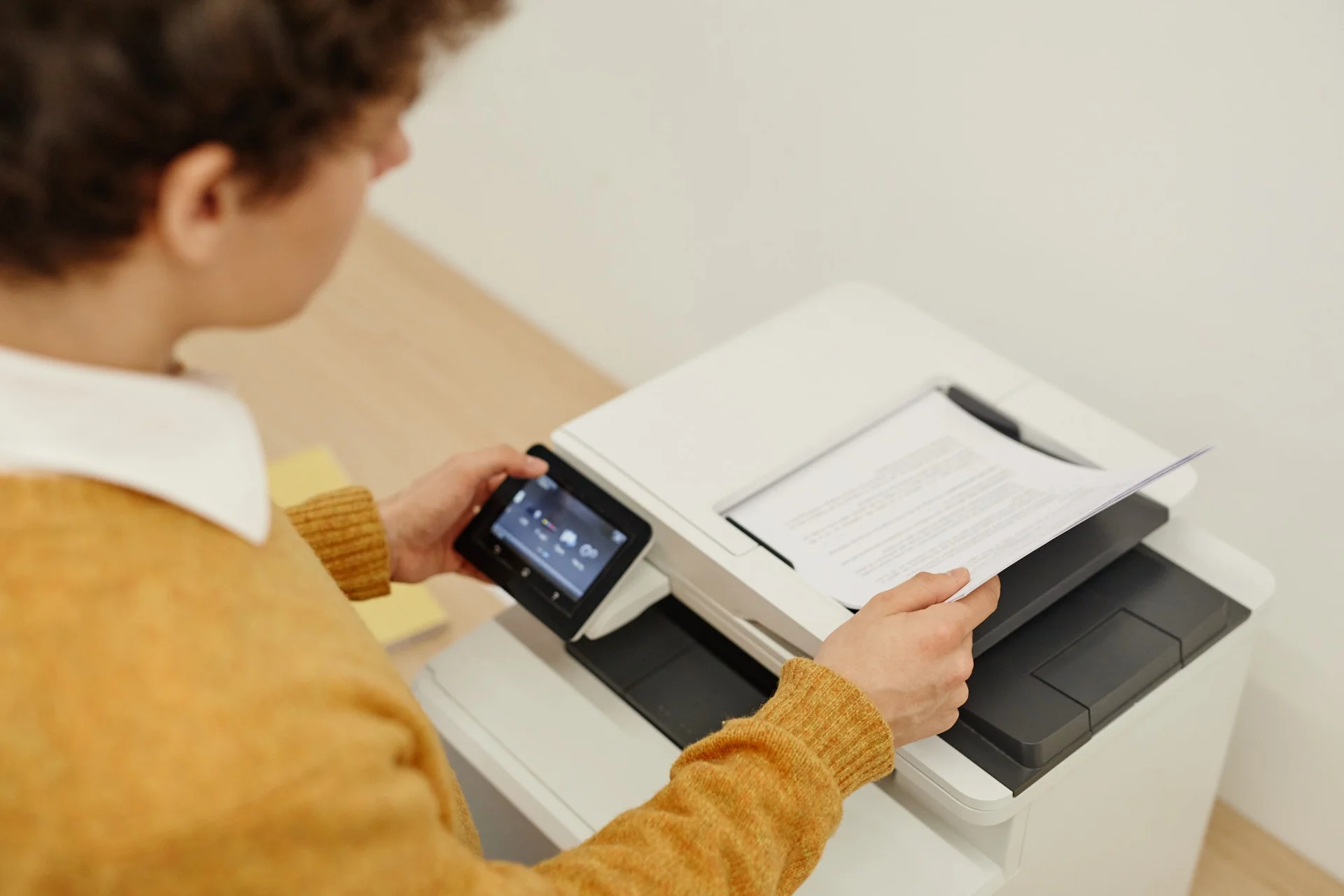
Let’s dissect together the process that allows a photocopier to faithfully reproduce documents. In this fascinating universe, let’s explore how drums, ink, light and many other elements combine to bring to life copies identical to the original.
Let’s dive into the enchanting world of photocopiers, where the laser printer transforms colour into a marvellous symphony of particles. Immerse yourself in this technological dance, which unites document and device to illuminate the surface of a perfect copy in black and white or in shimmering nuances. Let your business benefit from the digital know-how that these high-performing machines overflow with, because understanding how they work leads to appreciating them more. Together, let’s explore this captivating mechanical ballet that reveals the secrets of light and dark areas when reproducing our precious documents.
Key Steps to a Successful Photocopy
Before diving into the wonderful world of photocopiers, it’s essential to understand the steps that allow these devices to reproduce documents with such precision. Everything starts with exposing the image to light. Indeed, the original document is illuminated and its image is projected onto a photosensitive drum. This drum has a special surface that retains static electricity when light strikes the non-printed areas.
Next comes the toner step, which contains electrostatically charged particles. These particles are attracted to the charged areas of the drum and adhere to form a black or colour copy of the original image. The paper, in turn, is also electrically charged to attract the toner toward its surface. All that remains is to heat and press the paper to permanently fix the ink onto it, thus producing a perfect copy of the initial document.
Different Types of Photocopiers and Their Specificities
Photocopiers have evolved significantly since their invention, and today we find a wide variety of models adapted to business and individual needs. Among these models, laser printers stand out for their speed, print quality and ability to work equally well in black and colour. This type of device uses a process similar to that described previously, but with even greater precision thanks to the use of a laser beam to illuminate the original document.
Digital photocopiers, meanwhile, represent the new generation of these devices. They’re capable of scanning documents, sending them by email or storing them on electronic media. This not only saves time and space but also facilitates document management, particularly for large businesses. Whatever the photocopier’s type and size, all these devices share a common objective: faithfully reproducing the information contained on a document and thus facilitating communication between individuals.
-
Key steps to a successful photocopy
-
Different types of photocopiers and their specificities
Essential Components of a Photocopier
A photocopier is a fascinating device, and to understand how it works, it’s essential to look at its key components. One of the most important elements is the drum, a light-sensitive cylindrical surface that plays a major role in the copy process. When light strikes the drum, the exposed areas become conductive and attract toner particles, while unexposed areas remain insulating.
Toner is a special powder ink composed of fine particles. It’s heated and melted onto the paper during printing, ensuring optimal adhesion and exceptional image quality. Another masterpiece of the photocopier is the printer, which receives information from the drum and is responsible for transferring the image onto the paper. Laser printers are very common in modern photocopiers, offering high print quality and impressive speed to meet business needs.
Maintaining a Photocopier in Good Working Order
To guarantee quality copies and ensure device longevity, it’s essential to regularly maintain the photocopier. This includes cleaning sensitive surfaces such as the drum, checking toner levels and replacing used cartridges. Regular maintenance helps avoid common problems such as ink spots, paper jams and image quality issues.
The Advantages of Digital Technology
Digital technology has revolutionised the world of photocopying, offering advanced options for document reproduction. Digital photocopiers not only allow copying images in colour and black and white but also scanning documents for electronic archiving. This feature is particularly useful for businesses wishing to reduce their paper footprint and facilitate access to important documents.
The Photocopier: An Indispensable Ally for Reproducing Your Documents
Finally, the photocopier is essential equipment for any business wishing to efficiently reproduce its documents. Thanks to its key components such as the drum, ink and printer, as well as the advent of digital technology, this ingenious device allows us to create faithful copies of our precious documents. Don’t forget to regularly maintain your photocopier to guarantee optimal performance and a long lifespan. So, are you ready to explore the many advantages offered by this incredible tool?
Need a Professional Photocopier?
Get free personalised quotes from qualified suppliers in Belgium. Response within 24 hours, no obligation.