Jobs That Disappeared Due to Modern Photocopiers
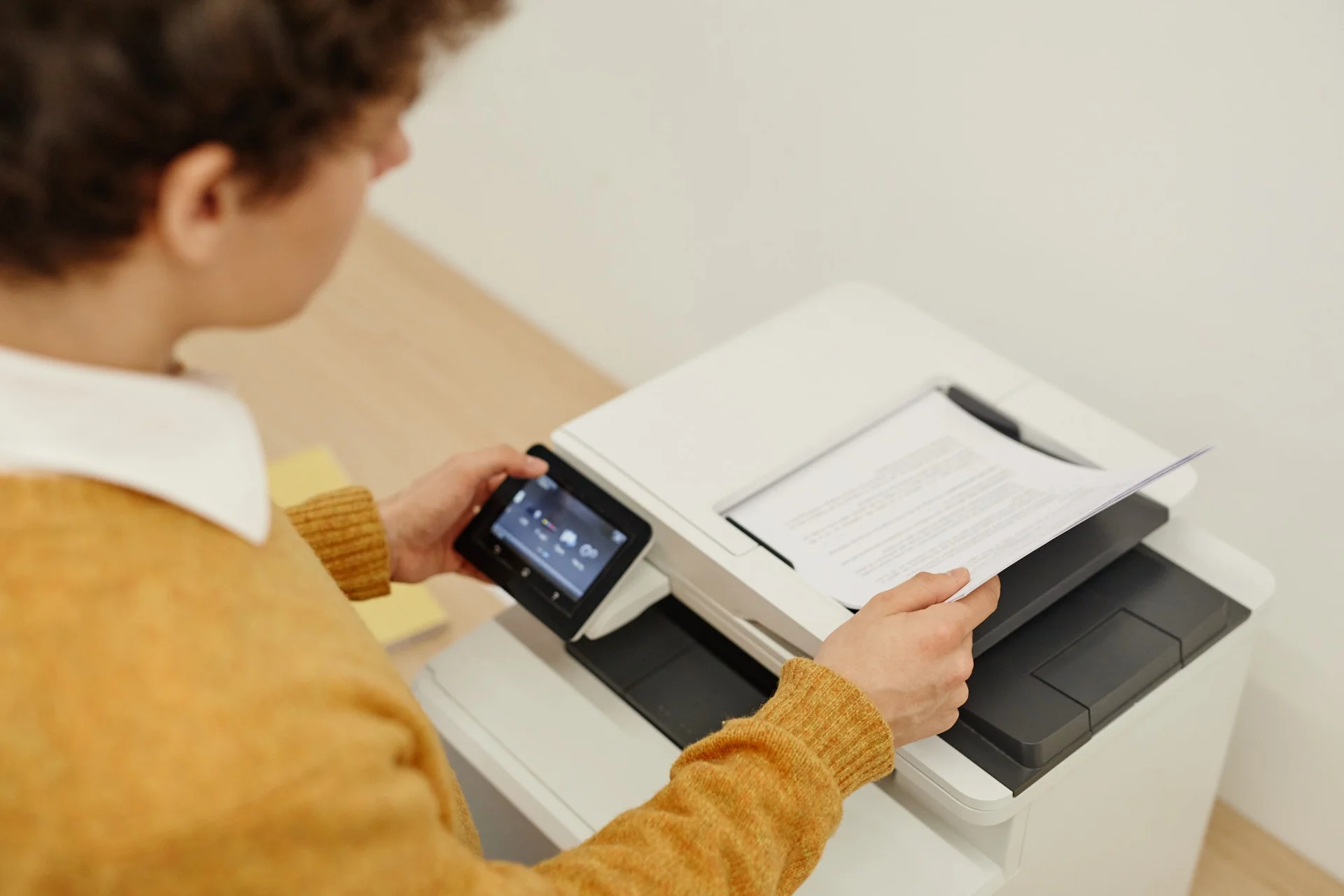
The advent of modern photocopiers has profoundly transformed the landscape of professions related to printing and document reproduction. In the past, professions such as typists, photoengravers and typographic printers played an essential role in producing documents, books and advertising materials. With the introduction of photocopying, these trades saw their importance diminish, as technology allowed anyone to reproduce documents in seconds, without requiring particular technical skills.
This change has not only modified how documents are produced but has also had an impact on training and employment in these sectors. Modern photocopiers, with their advanced features such as scanning, automatic duplex printing and the ability to process varied formats, have made certain traditional skills obsolete. For example, typists, who were once indispensable for document entry, have seen their role considerably reduced.
Moreover, the speed and efficiency of photocopiers have allowed businesses to reduce their operating costs, which has led to decreased demand for certain printing-related professions. This raises questions about the future of these professions and the need to adapt workers’ skills to an ever-changing environment.
Summary
-
Modern photocopiers have reduced demand for traditional professions such as typists and stenographers.
-
Photoengravers and photolithographers have seen their work affected by the advent of modern photocopiers.
-
Reprography operators face challenges due to competition from modern photocopiers.
-
The disappearance of traditional professions like bookbinders and finishers has significant social and economic consequences.
-
Typographic printers and offset printing professions are also affected by the impact of modern photocopiers.
Photoengravers and Photolithographers
Photoengravers and photolithographers have long been key players in the printing process. Their work consisted of creating printing plates from images and texts, a process requiring great precision and technical know-how. However, with the emergence of photocopiers and digital technologies, these professions have undergone a radical transformation.
Computer-aided design (CAD) software and digital printers have simplified the process of creating printable images, thus making photoengravers’ work less relevant. This technological evolution has also had repercussions on professional training. Young people entering the printing sector are now more likely to learn how to use graphic design software than to acquire traditional photoengraving skills.
Although some companies continue to use traditional techniques for specific projects, the majority of the market has moved towards faster and less expensive digital solutions. This poses a challenge for photoengravers and photolithographers who must adapt to these new realities to remain competitive.
Typists and Stenographers
Typists and stenographers played a crucial role in the professional world, facilitating rapid document drafting and note-taking during meetings or conferences. Their expertise was particularly appreciated in offices where precision and speed were essential. However, with the advent of personal computers and word processing software, the need for typists has considerably diminished.
Today, almost everyone can type on a keyboard, which has made this skill less rare and less valued. Similarly, stenographers, who used notation systems to rapidly transcribe speech, have seen their profession threatened by the rise of audio and video recording technologies. These tools now allow capturing speeches in real-time without requiring manual transcription.
Although some niches continue to require stenographers’ skills, such as in the legal field or during live events, the majority of businesses are turning to technological solutions to meet their documentation needs.
Reprography Operators
Reprography operators were once essential in the process of reproducing documents in large quantities. They mastered various printing techniques and were responsible for the proper functioning of printing machines. However, with the rise of multifunction photocopiers and digital printers, the traditional role of reprography operators has been largely replaced by machines capable of performing these tasks automatically.
This has led to a significant reduction in the number of operators needed in the sector. This evolution has also modified the nature of work in the reprography field. Operators must now be trained not only in using modern machines but also in managing digital workflows.
This requires continuous adaptation to new technologies and a willingness to learn new skills. Companies wishing to remain competitive must invest in training their staff to ensure they are able to effectively use modern equipment.
Bookbinders and Finishers
Bookbinders and finishers have long been responsible for the final assembly of printed documents, whether books, brochures or other materials. Their craftsmanship know-how was essential to guarantee that finished products were aesthetically pleasing and durable. However, with increasing automation of the printing process, these trades have also been affected by modernisation.
Modern machines can now perform binding and finishing tasks at unmatched speed and precision. Despite this trend towards automation, there is still demand for craftsmanship skills in certain market segments. Specialised bookbinders working on high-end or custom projects continue to be sought after for their unique expertise.
However, for the majority of standard printing work, businesses prefer to use automated solutions that allow them to reduce costs and accelerate the production process.
Typographic Printers
Typographic printers played a fundamental role in printing history, using movable type to create printed texts. This traditional trade was revolutionised by the invention of the printing press in the 15th century and experienced considerable growth until the advent of digital technologies. Today, although some typographic printers continue to practise their art for specific or artistic projects, the majority of the market has moved towards digital printing.
Digital printing offers unmatched flexibility in terms of customisation and speed. Typographic printers must therefore adapt to this new reality by integrating modern technologies into their practice. This may involve learning new software or investing in advanced digital equipment.
Although this may seem intimidating for some sector professionals, those who successfully adapt can find new opportunities in an ever-evolving market.
Offset Printing Professions
Offset printing has long been considered the standard in the commercial printing sector due to its ability to produce large print runs with exceptional quality. However, with the emergence of digital printing, this traditional model also faces significant challenges. Digital printing allows businesses to print small quantities without high initial costs related to the printing plates necessary for offset.
This has led to a decrease in offset printing volume in certain market segments. Nevertheless, there is still demand for this printing method in areas where quality is paramount, such as book publishing or artistic printing. Offset printers must therefore find a balance between maintaining their traditional skills whilst integrating new technologies to meet changing market needs.
Social and Economic Consequences of These Professions’ Disappearance
The progressive disappearance of these traditional professions has significant social and economic consequences. On one hand, this leads to job losses for those who have devoted their careers to these professions. Many workers find themselves facing a changing job market where their skills are no longer as sought after as before.
This can engender a feeling of professional insecurity and an imperative need to retrain or acquire new skills. On the other hand, this technological evolution can also have an impact on the quality of work produced in the printing sector. Whilst certain traditional techniques guaranteed a high level of craftsmanship and attention to detail, automation can sometimes lead to excessive standardisation.
This raises questions about the value of human know-how in the face of technological efficiency. In conclusion, although modern photocopiers have revolutionised the printing sector by making certain professions obsolete, it is essential that workers adapt to new market realities. Continuous training and acquisition of new skills will be crucial for navigating this ever-changing landscape.
For those considering a career change or wishing to explore opportunities offered by the real estate sector in Belgium, our platform offers free estimates by three expert agencies in your region.
A related article to “Jobs that disappeared due to modern photocopiers” is about recent technologies in professional printers. This article explores how technological advances in professional printers have contributed to the disappearance of certain traditional professions related to document reproduction. The new features of modern printers have revolutionised the printing sector, leading to significant changes in the job market.
Need a Professional Photocopier?
Get free personalised quotes from qualified suppliers in Belgium. Response within 24 hours, no obligation.