Photocopiers in Contemporary Art
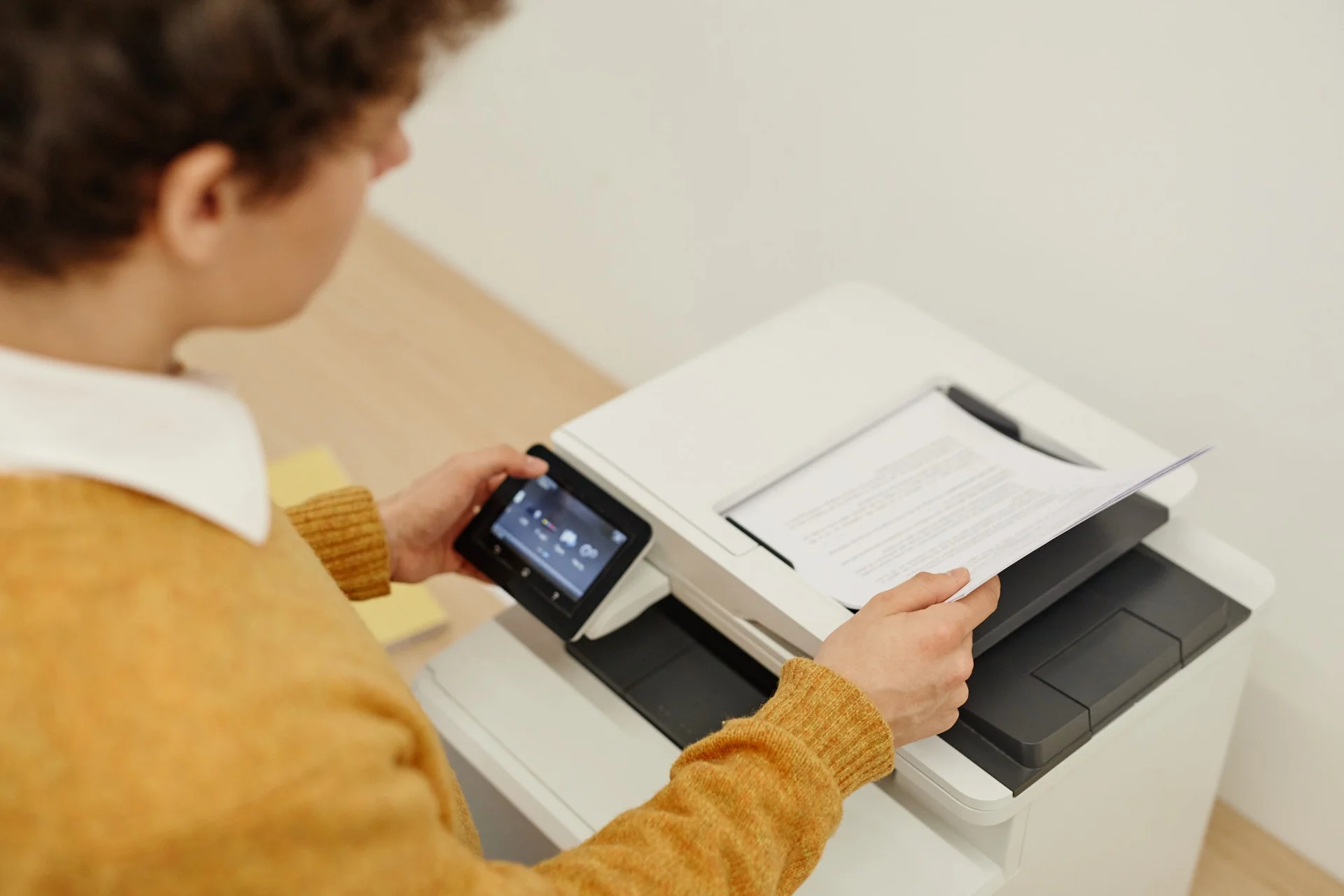
Photocopiers, often perceived as simple office machines, have found an unexpected place in the world of contemporary art. Indeed, these devices, originally designed to reproduce documents, have transformed into genuine creative tools for many artists.** Thanks to their ability to reproduce images and texts with remarkable precision, photocopiers allow exploration of new dimensions of artistic creation.**
They offer a unique approach that combines technology and creativity, thus opening the way to innovative and accessible works of art. The use of photocopiers in art is not limited to simple image reproduction. Artists also exploit the technical characteristics of these machines to create original works.
For example, manipulating contrast, brightness, and saturation settings can give rise to surprising visual effects. Additionally, the photocopying process itself can be considered an art form in its own right, where the act of copying becomes a performance that questions the notion of originality and authenticity in the art world.
Summary
-
Photocopiers are used as artistic tools to create unique and original works.
-
The use of photocopiers in contemporary art has evolved to become a form of artistic expression in its own right.
-
Pioneer artists have explored and experimented with the use of photocopiers in their artistic work.
-
Techniques and methods used with photocopiers in contemporary art include image manipulation, layering, and collage creation.
-
The use of photocopiers in contemporary art raises political and social questions about reproduction, authenticity, and intellectual property.
The Evolution of Photocopier Use in Contemporary Art
Over the decades, the use of photocopiers in art has evolved significantly. In the 1960s and 1970s, artists began experimenting with these machines, seeking to push the limits of reproduction. At that time, the photocopier was still a relatively new tool, and its artistic potential was not yet fully recognised.
However, movements like pop art and conceptualism opened the way to a more in-depth exploration of reproduction techniques. Today, photocopiers are integrated into a wide range of artistic practices. Contemporary artists use these machines not only to create works of art but also to challenge established conventions around artistic creation.
Technological evolution has also played a crucial role in this transformation, with the advent of digital photocopiers offering infinite possibilities in terms of image manipulation and visual creation.
Pioneer Artists in the Use of Photocopiers in Their Work
Among the artists who have marked the history of photocopier use, we find iconic figures such as Robert Rauschenberg and Andy Warhol. Rauschenberg was one of the first to integrate photocopying into his creative process, using this tool to create collages and mixed works that challenged traditional notions of originality. His innovative approach opened the way for other artists who saw in the photocopier a unique means of expression.
Andy Warhol, for his part, used photocopiers to reproduce his famous silk-screen prints. His work highlighted the relationship between art and mass consumption, underlining how photocopiers can be used to create works that question our relationship with image and popular culture. These pioneer artists not only expanded the horizons of contemporary art but also inspired a new generation of artists to explore the possibilities offered by photocopiers.
Techniques and Methods Used with Photocopiers in Contemporary Art
Contemporary artists use a variety of techniques and methods to fully exploit the creative potential of photocopiers. One of the most common approaches is to play with the machine’s settings to create unique visual effects. For example, by modifying contrast or using coloured filters, artists can transform an ordinary image into a striking work of art.
Additionally, some artists integrate the photocopying process into their artistic practice by using the machine as a performance tool. For example, they may make photocopies live during artistic events, thus engaging the public in the creative process. This interactive approach not only creates unique works on the spot but also establishes a dialogue between the artist and the public about the very nature of artistic creation.
The Political and Social Implications of Photocopier Use in Art
The use of photocopiers in contemporary art also raises important political and social questions. As an accessible reproduction tool, the photocopier allows artists to disseminate their ideas and messages to a wider audience. This is particularly relevant in a context where the voice of marginalised artists can often be ignored.
By using photocopiers to create works that address social or political themes, these artists manage to raise public awareness about crucial issues. Additionally, the reproduction process itself raises questions about authenticity and intellectual property.** In a world where everything can be copied and reproduced instantly, artists must navigate a complex landscape where the value of their work may be questioned.**
By integrating these concerns into their artistic practice, they contribute to a broader debate about the nature of art and its role in contemporary society.
Exhibitions and Events Showcasing Art Created with Photocopiers
Over the years, several exhibitions and events have been dedicated to art created with photocopiers. These events offer a platform for artists to present their work and explore the different facets of this artistic practice. From art galleries to contemporary art festivals, these events highlight the diversity of artistic approaches using photocopiers.
These exhibitions do not merely display works; they also encourage dialogue between artists and visitors. By organising workshops or live performances, these events allow the public to interact with the creative process and learn more about the techniques used by artists. This helps demystify the use of photocopiers in art and show that this tool can be a vehicle for personal and collective expression.
The Place of Photocopiers in the Contemporary Art Market
In the contemporary art market, works created with photocopiers are beginning to find their place alongside other more traditional art forms. Although some people may still consider these works less valuable due to their reproducible nature, it is important to recognise that the value of a work of art does not lie solely in its uniqueness. Artists who use photocopiers often succeed in creating pieces that capture the public’s imagination and arouse growing interest among collectors.
Additionally, with the rise of digital and new technologies, the art market is evolving rapidly. Works created with photocopiers can now be sold online, thus reaching a global audience. This increased accessibility allows artists to expand their reach and attract a new audience that appreciates their innovative approach.
Future Perspectives for Photocopier Use in Contemporary Art
As technology continues to evolve, it is fascinating to imagine how photocopiers might influence the future of contemporary art.** With the advent of new features such as 3D printing and augmented reality, artists could explore even further the possibilities offered by these machines.** The integration of these technologies could give rise to even more interactive and immersive works.
Furthermore, as the world becomes increasingly aware of environmental issues, artists will likely seek to use photocopiers as a sustainable means of artistic creation. By reusing paper or integrating recycled elements into their works, they could contribute to an artistic movement that values sustainability whilst continuing to explore the limits of creativity. In conclusion, photocopiers have established themselves as indispensable artistic tools in the contemporary landscape.
Their use by various artists testifies not only to their creative potential but also to their ability to question our relationship with image and reproduction. For those considering exploring this artistic path or even those wishing to sell their works inspired by this innovative technique, it is possible to obtain a free estimate from local experts via our platform.
A related article about photocopiers in contemporary art is the one discussing how to choose the best multifunction printer for your office. This article, available on photocopieurs.be, offers practical advice for selecting the equipment best suited to your professional needs. It is interesting to see how contemporary artists can also take advantage of these technologies to create unique and innovative works.
Need a Professional Photocopier?
Get free personalised quotes from qualified suppliers in Belgium. Response within 24 hours, no commitment.