Photocopiers in Crime Series: Clues and Evidence
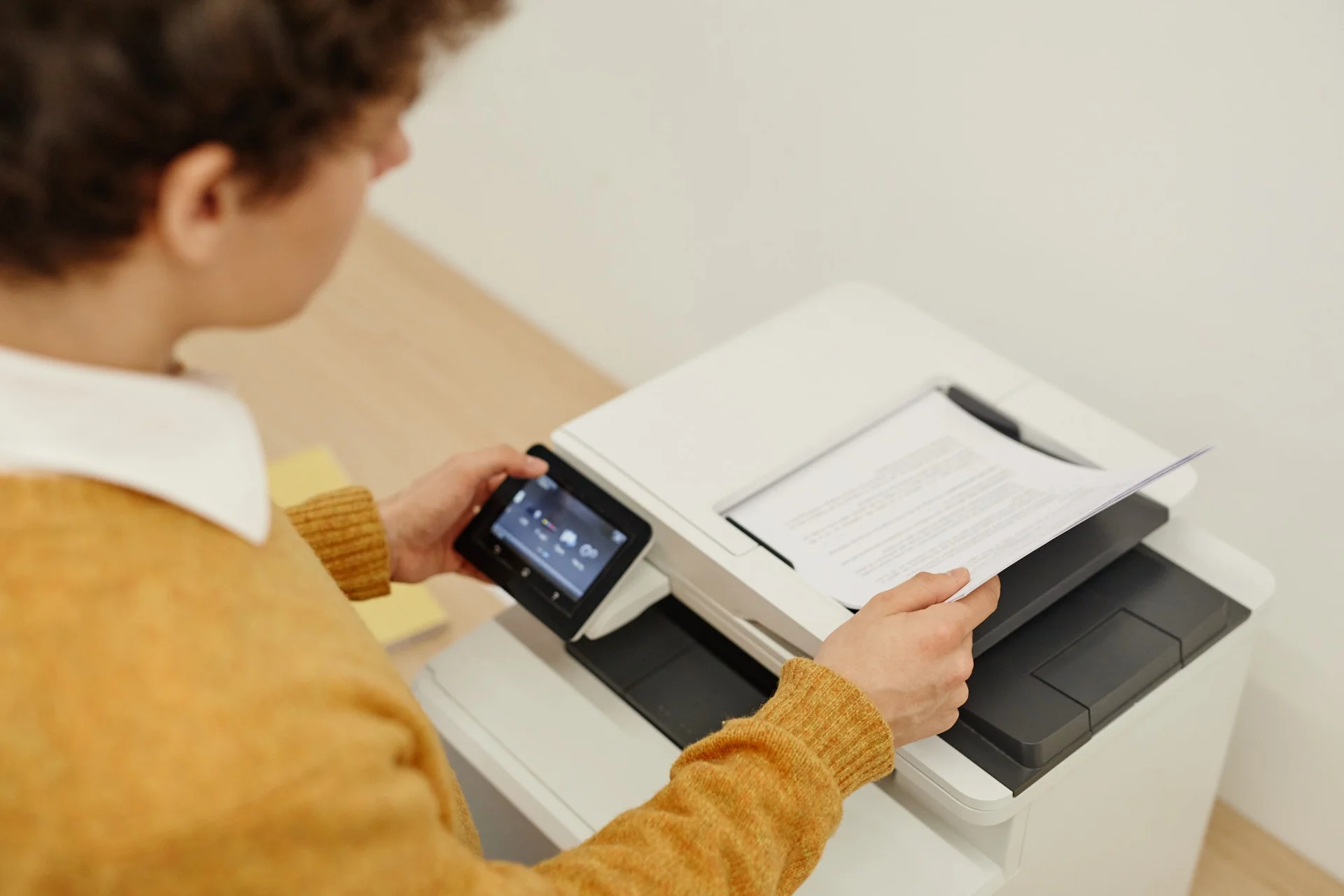
Photocopiers, although often perceived as simple office tools, play a crucial role in the world of crime series. In these fictions, they are often used to reproduce documents, evidence or even clues that can turn the course of an investigation. Scriptwriters exploit this technology to create captivating plots, where a simple photocopied document can reveal buried secrets or establish links between suspects.
Indeed, the ability to reproduce documents with remarkable precision allows fictional investigators to decipher complex mysteries. In many series, photocopiers are integrated into key scenes where the main characters discover crucial information. For example, a detective may photocopy a document found at a crime scene, which allows them to analyse the details without damaging the original.
This strategic use of photocopiers underlines their importance in the investigation process and highlights their role as an indispensable investigation tool.
Summary
-
Photocopiers are frequently used in crime series to reproduce important documents.
-
Clues revealed through photocopier use can include fingerprints, watermarks and traces of manipulation.
-
Evidence obtained through photocopiers can be used to catch criminals and solve cases.
-
Counterfeiting and falsification techniques used with photocopiers can make evidence less reliable.
-
Frequent mistakes made by criminals when using photocopiers can lead to them being discovered more easily.
Clues Revealed Through Photocopier Use
Examining Margins
Investigators can examine the margins of a photocopy to detect ink traces or marks left by the original paper. These elements can provide valuable information about the document’s origin or the author’s intentions.
In-Depth Document Analysis
Moreover, modern photocopiers are often equipped with advanced features that allow more in-depth document analysis. Investigators can thus use techniques such as spectral analysis to identify the types of ink used or to detect alterations on the photocopied document.
The Importance of Technology in Police Investigations
These clues can prove decisive in establishing a link between a suspect and a crime, thus reinforcing the importance of this technology within the framework of police investigations.
Evidence Obtained Through Photocopiers
Within the framework of a criminal investigation, photocopiers can also serve to obtain tangible evidence. For example, a photocopied document may contain crucial information about a suspect, such as their address or contacts. These elements can be used to corroborate other evidence or to establish an alibi.
In some crime series, detectives even use photocopies to create analysis boards, linking different elements of a complex case. It is also interesting to note that photocopiers can be used to reproduce physical evidence, such as fingerprints or footprints. By photocopying a document containing these elements, investigators can keep a record of this evidence without risking altering it.
This not only preserves evidence integrity but also facilitates its presentation during a trial.
Counterfeiting and Falsification Techniques Used with Photocopiers
Unfortunately, the use of photocopiers is not limited to legitimate investigations. In the criminal world, these devices are often diverted to commit counterfeiting and falsification acts. Criminals exploit the ability of photocopiers to reproduce documents with great precision to create false papers, such as passports or identity certificates.
These falsification techniques are often at the heart of plots in crime series, where investigators must foil the cunning plans of criminals. The series highlight different methods used by criminals to circumvent security systems integrated into modern photocopiers. For example, some characters may manipulate the device’s settings to obtain optimal print quality, thus making counterfeit detection more difficult.
This struggle between investigators and criminals adds a captivating dimension to crime plots and underlines the importance of constant vigilance in the face of evolving criminal techniques.
Frequent Mistakes Made by Criminals When Using Photocopiers
Despite their ingenuity, criminals are not immune to mistakes when using photocopiers for their illegal activities. In many crime series, these mistakes often become the key that allows investigators to solve a case. For example, a criminal may neglect to erase certain sensitive information before photocopying a document, thus leaving a compromising trace that can be used against them.
Moreover, some criminals underestimate investigators’ ability to minutely analyse photocopied documents. They may think that a simple reproduction will suffice to mask their tracks, but investigators are often trained to detect even the smallest anomalies. These frequent mistakes add a touch of humour and irony to crime plots, whilst underlining the importance of a methodical approach in investigation work.
Analysis of Photocopied Documents in Criminal Investigations
The Importance of Details
These elements can provide clues about the document’s origin and its author. In some crime series, this analysis is presented as an art in itself, where every detail counts. Investigators often use specialised tools to examine documents from different angles and lighting, thus revealing hidden information.
Scientific Rigour
This attention to detail underlines the importance of scientific rigour in police work and shows how even a simple photocopied document can play a key role in solving a case.
The Key to Resolution
Ultimately, analysis of photocopied documents can be the key to solving a criminal case. Investigators must be meticulous and methodical in their work to obtain precise and reliable results.
Technological Advances in Photocopier Use in Crime Series
With rapid technological evolution, photocopiers have also seen significant advances that influence their use in crime series. Modern models are now equipped with advanced features such as high-resolution scanning and wireless connectivity, allowing investigators to quickly access important documents from anywhere. These innovations facilitate investigation work and allow more effective collaboration between different services.
Moreover, some series explore the use of sophisticated software capable of automatically analysing photocopied documents looking for anomalies or signs of falsification. These technological tools offer investigators a considerable advantage in their quest for truth and reinforce the idea that technology can be a precious ally in the fight against crime.
Limitations and Challenges Related to Using Photocopiers as Evidence in Crime Series
Despite their many advantages, using photocopiers as evidence in criminal investigations also presents certain limitations and challenges. One of the main problems lies in the possibility that photocopied documents can be easily falsified. Criminals can manipulate these documents before they are analysed by investigators, thus making their evidential value contestable.
Moreover, there are also concerns regarding the confidentiality and security of information reproduced by photocopiers. In some crime series, this question is raised when sensitive documents are accidentally disclosed or misused. This underlines the importance of rigorous and secure document management within criminal investigations.
In conclusion, the use of photocopiers in crime series is a fascinating subject that highlights both their potential as an investigation tool and their limitations as evidence. Whether for revealing crucial clues or committing illegal acts, these devices play a central role in the narrative development of many crime plots. As viewers, we are often captivated by how these technologies are integrated into the story, whilst being reminded that behind each photocopied document lies a complex story that deserves to be explored.
A related article on photocopier security in businesses can be found on this link. It addresses the importance of protecting sensitive data when using professional photocopiers.
Need a Professional Photocopier?
Get free personalised quotes from qualified suppliers in Belgium. Response within 24 hours, no obligation.