Photocopiers in Education: Evolution of Use
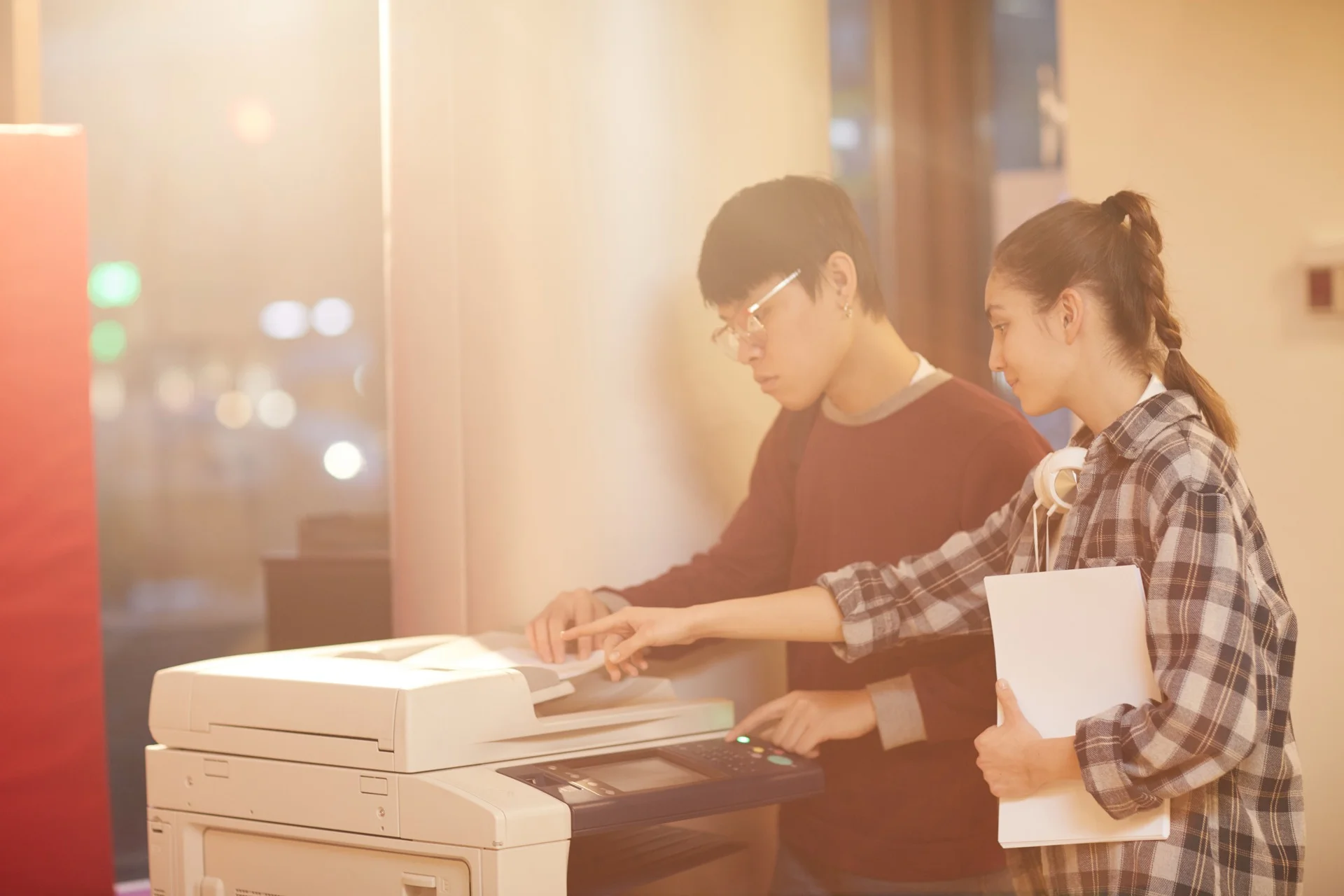
The history of photocopiers in the educational environment dates back to the 1960s, when technology began to develop rapidly. At that time, teachers and school administrators were looking for effective ways to reproduce documents, teaching materials, and exercises for their pupils. The first photocopiers, although rudimentary compared to modern models, revolutionised the way information was shared in classrooms.
Before the advent of these machines, document duplication was mainly done through typewriters or mimeographs, which were often lengthy and laborious to use. Over the decades, photocopiers have evolved, becoming more accessible and more efficient. In the 1980s and 1990s, their use became widespread in educational establishments, enabling teachers to quickly produce a variety of materials.
This evolution also coincided with an increased demand for diversified pedagogical resources, which led to a more extensive integration of photocopiers into daily school life. Today, these machines have become indispensable tools in schools, facilitating information dissemination and supporting learning.
Summary
-
The history of photocopiers in education
-
The advantages and disadvantages of photocopiers in the school environment
-
The impact of technology on photocopier use in education
-
New trends and developments in photocopier use in education
-
Environmental challenges related to photocopier use in schools
The Advantages and Disadvantages of Photocopiers in the School Environment
Photocopiers present many advantages within the school framework. Firstly, they allow rapid and efficient document reproduction, which is essential for teachers who must prepare lessons and exercises for their pupils.** Thanks to these machines, it is possible to produce copies of textbooks, exercise sheets, or visual materials in just a few minutes, contributing to more dynamic and interactive teaching.**
Additionally, modern photocopiers offer high print quality, ensuring that reproduced documents are clear and legible. However, photocopier use is not without disadvantages. One of the main problems lies in the cost associated with their operation.
Ink, paper, and machine maintenance can represent a significant expense for educational establishments, especially in an often constrained budgetary context. Moreover, excessive dependence on photocopiers can harm pedagogical creativity. Teachers might be tempted to favour document reproduction rather than exploring more innovative and engaging teaching methods.
The Impact of Technology on Photocopier Use in Education
The impact of technology on photocopier use in education is undeniable. With the advent of computing and the Internet, photocopiers have evolved to incorporate advanced digital features.** Today, it is possible to print directly from a computer or mobile device, which further simplifies the document reproduction process.**
Additionally, some models allow document scanning, thus offering a solution for easily archiving and sharing pedagogical resources. This technological integration has also led to more thoughtful photocopier use. Teachers can now design interactive digital materials that complement traditional paper copies.
For example, they can create online quizzes or multimedia presentations that enrich the learning experience. However, this evolution also raises questions about the need for adequate teacher training so they can fully benefit from these new technologies.
New Trends and Developments in Photocopier Use in Education
Current trends show an evolution towards more sustainable and responsible photocopier use in educational establishments. Many establishments are becoming aware of the importance of reducing their ecological footprint and are seeking to adopt more environmentally friendly practices. This includes the use of recycled paper, as well as the implementation of eco-responsible printing systems that limit waste.
At the same time, there is a trend towards increasing digitalisation of pedagogical resources. Photocopiers are no longer just used to reproduce paper; they also play a key role in the transition to hybrid or entirely digital teaching. Teachers can scan their materials and share them online with their pupils, which facilitates access to information and encourages autonomous learning.
This evolution towards digital also offers increased flexibility to adapt to pupils’ varied needs.
Environmental Challenges Related to Photocopier Use in Schools
The widespread use of photocopiers in schools poses several environmental challenges. Firstly, paper consumption remains a major problem. Despite efforts to use recycled paper, demand for virgin paper remains high, which contributes to deforestation and pollution related to its production.
Additionally, ink cartridges and toners used in photocopiers are often difficult to recycle and can have a negative environmental impact if not disposed of correctly. Another challenge lies in managing the waste generated by these machines. Educational establishments must implement effective systems to collect and recycle used ink cartridges and unused or damaged paper.
This requires increased awareness among staff and pupils about the importance of recycling and waste reduction. By integrating these sustainable practices into their daily operations, schools can contribute to a more environmentally friendly future.
Alternatives to Traditional Photocopiers in Education
Faced with the challenges posed by traditional photocopier use, several alternatives are emerging in the educational environment.** One of the most promising solutions is the use of digital platforms for sharing pedagogical content.** Teachers can create online resources accessible to all their pupils without needing to print anything.
This not only reduces paper consumption but also allows rapid and easy content updates. Additionally, some schools are exploring the use of interactive whiteboards and other digital technologies to replace traditional paper materials. These tools allow teachers to display multimedia content in real-time and interact with their pupils in a dynamic and engaging way.
By integrating these technologies into their teaching, establishments can not only reduce their dependence on photocopiers but also enrich the overall learning experience.
Best Practices for Responsible Photocopier Use in Educational Establishments
To maximise advantages whilst minimising disadvantages related to photocopier use, it is essential for educational establishments to adopt certain best practices. Firstly, it is crucial to establish a clear policy regarding document printing and reproduction. This can include guidelines on the type of documents to print, as well as the number of copies allowed to avoid waste.
Next, raising awareness among staff and pupils about the importance of responsible photocopier use is fundamental. Regular training sessions can be set up to teach teachers how to efficiently use these machines whilst integrating sustainable practices. For example, encouraging duplex printing or using draft mode for internal documents can help reduce paper consumption.
The Future of Photocopiers in Education: What Prospects?
The future of photocopiers in the educational environment seems promising but requires continuous adaptation to technological and environmental changes. As digital takes a predominant place in modern education, traditional photocopiers will likely continue to coexist with these new technologies. However, their role could evolve towards that of complementary tools rather than central ones.
Educational establishments will also need to commit further to an eco-responsible approach by integrating sustainable solutions into their daily operations. This could include not only the use of energy-efficient photocopiers but also the promotion of a zero-waste culture within schools. Ultimately, the future of photocopiers will depend on their ability to adapt to the changing needs of the educational system whilst respecting our environment.
In conclusion, although photocopiers have played an essential role in education over recent decades, their future will be shaped by our collective ability to innovate whilst preserving our planet. For those considering optimising their use or even exploring other options available on the market, it may be wise to consult our platform to obtain free estimates on the best solutions adapted to their specific needs.
A related article to “Photocopiers in Education: Evolution of Use” is the one about how to choose the best high-resolution professional scanner for your needs. This article offers useful advice for selecting the professional scanner best suited to your document scanning needs. It can be useful for educational establishments seeking to improve their scanning and document management processes.
Need a Professional Photocopier?
Get free personalised quotes from qualified suppliers in Belgium. Response within 24 hours, no commitment.