From Printers to Digital Ecosystems: The Evolution of Office Services
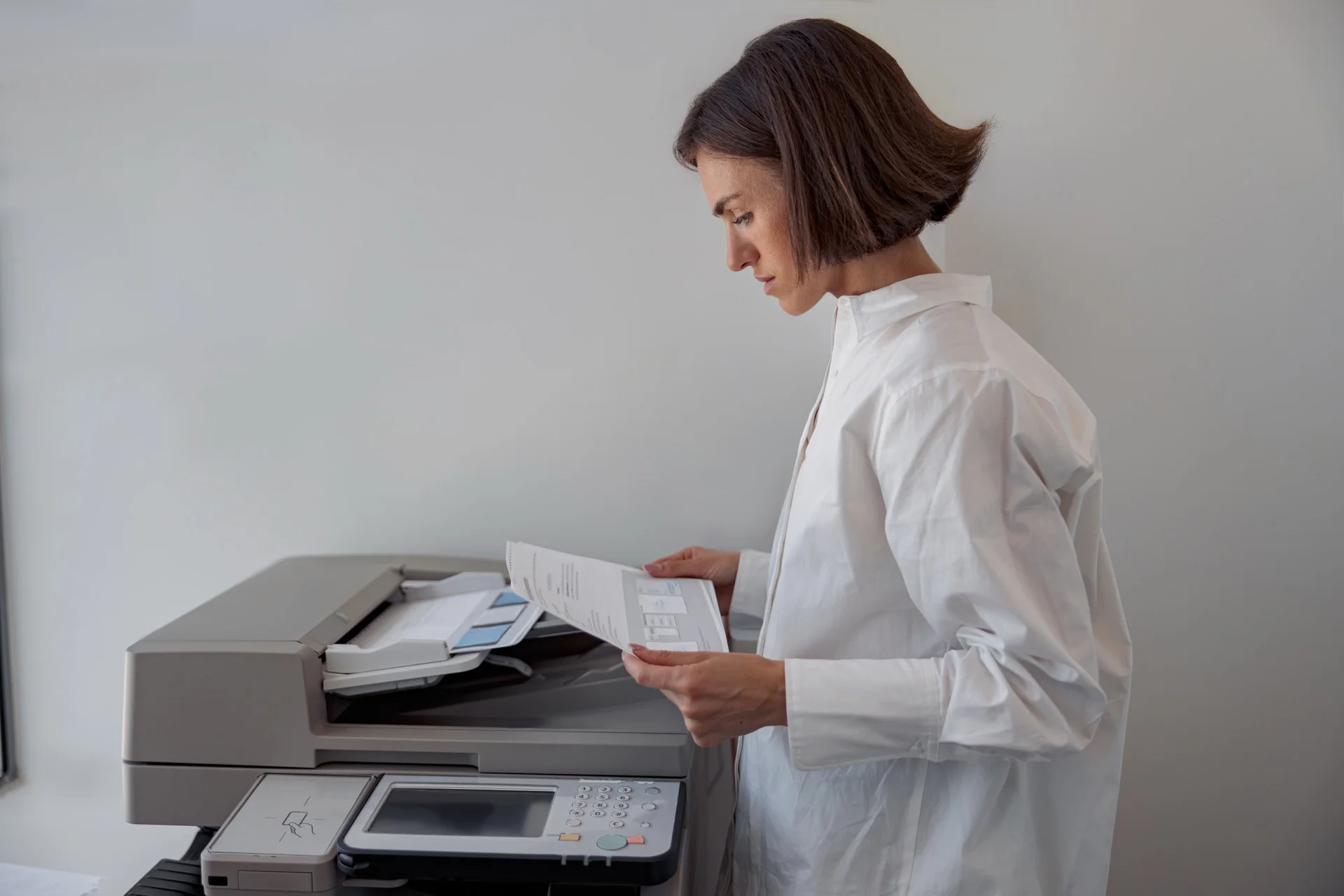
The office printer has come a long way from its humble beginnings as a device that simply put text on paper. Today’s professional multifunction devices are sophisticated hubs in broader digital ecosystems. Understanding this evolution helps businesses leverage modern capabilities effectively.
The evolution journey
1990s: The dedicated printer era
Characteristics:
- Single function devices
- Parallel port connections
- One computer, one printer
- Manual paper handling
- Basic quality
Business impact: Simple document output, limited sharing
2000s: The multifunction revolution
Developments:
- Print, copy, scan, fax combined
- Network connectivity
- Shared access
- Digital sending
- Improved quality and speed
Business impact: Space savings, basic workflow improvement
2010s: The connected age
Innovations:
- Cloud integration
- Mobile printing
- Touch interfaces
- Automated workflows
- Security features
Business impact: Anywhere printing, document digitalisation
2020s: Digital ecosystem integration
Current state:
- AI-powered features
- Deep application integration
- Automated document processing
- Predictive maintenance
- Sustainability focus
Business impact: Seamless digital workflows, minimal manual intervention
The modern digital ecosystem
What it includes
Hardware layer:
- Multifunction printers/copiers
- Scanners
- Label printers
- Wide-format devices
Software layer:
- Print management
- Document management
- Workflow automation
- Security solutions
Cloud layer:
- Cloud storage integration
- SaaS applications
- Remote management
- Analytics
Service layer:
- Managed print services
- Technical support
- Consumable management
- Consulting
Integration points
Modern office printers connect to:
| System | Integration benefit |
|---|---|
| Microsoft 365 | Direct scan/print to SharePoint, OneDrive |
| Google Workspace | Drive integration, cloud printing |
| ERP systems | Automated document capture |
| CRM platforms | Customer document management |
| Accounting software | Invoice processing |
Key technologies shaping the future
Artificial intelligence
Current AI applications:
- Automatic document classification
- Data extraction from scans
- Print queue optimisation
- Predictive maintenance
- Security threat detection
Future possibilities:
- Voice-controlled operation
- Content-aware formatting
- Automated translations
- Quality prediction
Internet of Things (IoT)
How IoT transforms printing:
- Real-time monitoring
- Automatic supply ordering
- Usage analytics
- Remote diagnostics
- Fleet optimisation
Cloud computing
Cloud-enabled capabilities:
- Print from anywhere
- Scan to cloud storage
- Remote device management
- Software-as-a-service features
- Centralised administration
Business benefits of the modern ecosystem
Operational efficiency
| Traditional | Modern ecosystem |
|---|---|
| Manual document handling | Automated workflows |
| Walk to printer | Print anywhere |
| Paper-based approval | Digital workflows |
| Reactive maintenance | Predictive service |
Cost optimisation
Savings opportunities:
- Print what you need (follow-me printing)
- Right-size your fleet (analytics-driven)
- Reduce paper waste (digital alternatives)
- Lower IT burden (managed services)
Enhanced security
Modern security features:
- User authentication
- Encrypted transmission
- Secure deletion
- Audit trails
- Compliance reporting
Sustainability
Environmental benefits:
- Reduced paper usage
- Energy-efficient devices
- Longer equipment life
- Responsible recycling
Implementing a digital print ecosystem
Assessment phase
Evaluate current state:
- Inventory existing equipment
- Map document workflows
- Identify pain points
- Assess technology readiness
Planning phase
Define target state:
- Desired capabilities
- Integration requirements
- Security needs
- Budget parameters
Implementation phase
Deploy systematically:
- Infrastructure preparation
- Equipment deployment
- Software configuration
- Integration setup
- User training
Optimisation phase
Continuous improvement:
- Monitor usage and performance
- Gather user feedback
- Adjust configurations
- Expand capabilities
Managed print services
What MPS includes
A comprehensive managed print service typically offers:
- Assessment: Analyse current state and needs
- Hardware: Right-sized, modern equipment
- Software: Print management, security, workflow
- Supplies: Automatic delivery of consumables
- Service: Maintenance and support
- Reporting: Usage and cost visibility
Benefits of MPS
| Aspect | In-house | Managed service |
|---|---|---|
| Capital expense | High | Low/none |
| IT time required | High | Minimal |
| Cost predictability | Variable | Fixed |
| Technology updates | Your responsibility | Included |
| Expertise | Build internally | Provided |
Future trends to watch
Hybrid work support
Evolving needs:
- Print from home
- Cloud-based document access
- Secure remote printing
- Virtual printer drivers
Sustainability focus
Growing importance:
- Carbon footprint tracking
- Circular economy models
- Energy reporting
- Sustainable consumables
Automation expansion
Increasing automation:
- Zero-touch document processing
- AI-powered routing
- Automatic archiving
- Intelligent capture
Security enhancement
Heightened requirements:
- Zero-trust architecture
- Continuous authentication
- Threat intelligence
- Compliance automation
Getting started
For small businesses
- Start with a capable multifunction device
- Enable basic cloud integration
- Set up secure printing
- Consider managed supplies
For medium businesses
- Implement print management software
- Integrate with business systems
- Deploy follow-me printing
- Consider managed services
For large enterprises
- Full managed print services
- Deep application integration
- Analytics-driven optimisation
- Sustainability reporting
Summary
The evolution from simple printers to digital ecosystems represents a significant opportunity for businesses:
- Efficiency: Automated workflows reduce manual effort
- Integration: Printers become part of digital infrastructure
- Intelligence: AI and analytics drive optimisation
- Flexibility: Print from anywhere, on any device
- Sustainability: Reduce environmental impact
The key is viewing print infrastructure not as a cost to minimise, but as an enabler of digital transformation.
Ready to modernise your print infrastructure?
Get free personalised quotes from qualified suppliers in Belgium. Response within 24h, no obligation.