Professional Printer for Hospital: Efficiency Optimisation
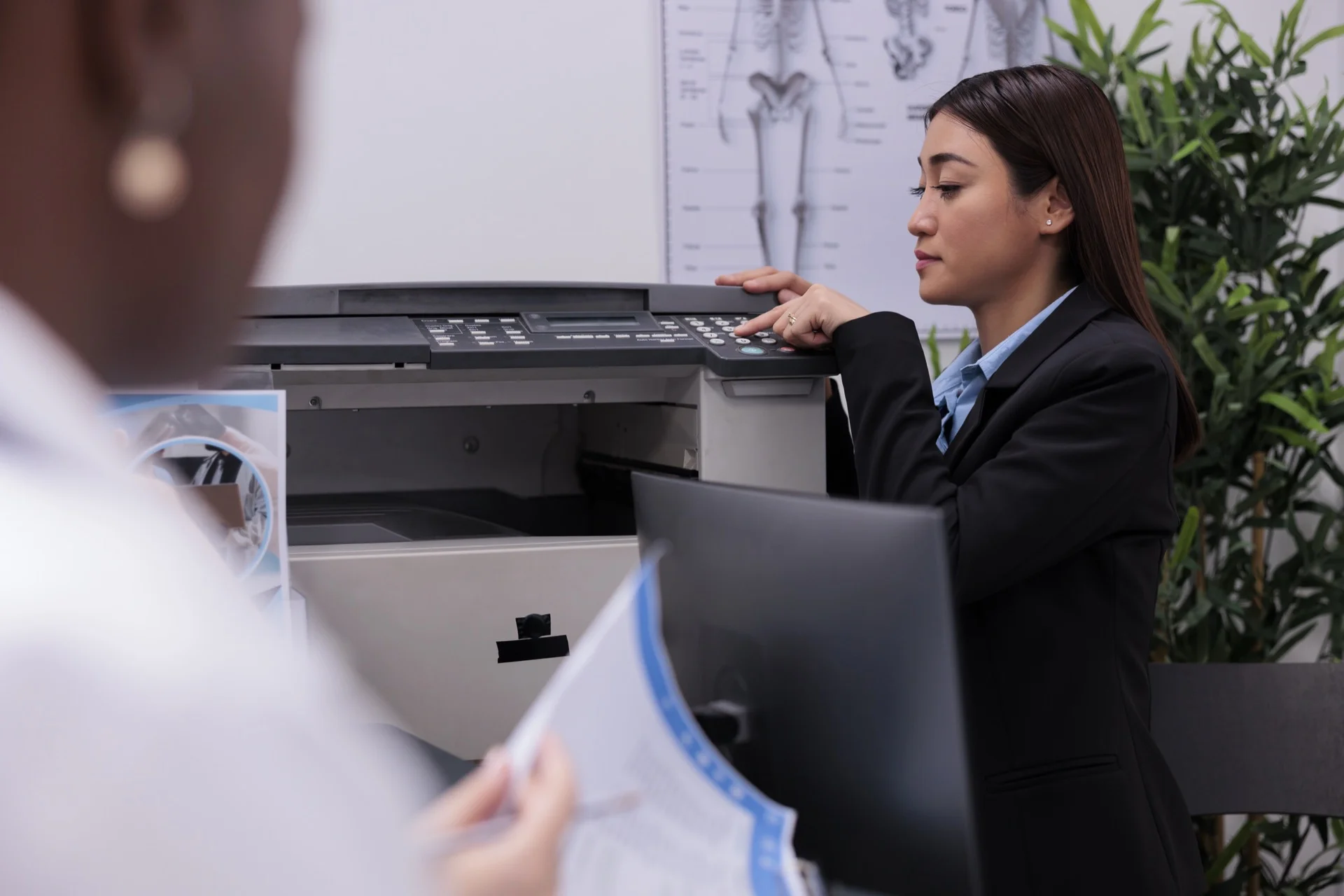
In the healthcare sector, efficiency and precision are imperatives. Hospitals, as essential institutions, must manage a multitude of documents ranging from medical records to prescriptions, including laboratory reports. The professional printer presents itself as an indispensable tool to meet these varied needs.
Unlike domestic or office printers, professional printers are designed to support high print volumes whilst guaranteeing impeccable quality. They play a crucial role in information flow management, thus contributing to improving patient care. The importance of a professional printer in a hospital is not limited only to document production.
It also influences internal and external communication, facilitating information sharing between different departments. In an environment where every second counts, having reliable and high-performing equipment is essential to ensure continuity of care. This article will explore the various aspects related to the use of professional printers in hospitals, highlighting their advantages, characteristics and best practices.
Summary
-
Introduction to professional printers for hospitals
-
The advantages of using a professional printer in a hospital
-
The features to look for in a professional printer for hospitals
-
How to choose the best professional printer for a hospital’s specific needs
-
Best practices for optimising professional printer efficiency in a hospital
Advantages of Using a Professional Printer in a Hospital
Productivity and Efficiency
Hospitals generate a massive quantity of documents every day, ranging from admission forms to medical examination results. A professional printer is designed to operate continuously, which helps reduce waiting times and increase medical staff productivity.
High Performance
For example, a laser printer can produce several hundred pages per minute, which is crucial during peak periods. Moreover, these printers often offer advanced features such as automatic duplex printing, integrated scanning and faxing. This not only saves time but also reduces office supply costs.
Cost Reduction and Organisation Improvement
For example, a study showed that using multifunction printers in hospitals can reduce printing costs by up to 30%. Moreover, these devices are often equipped with document management systems that facilitate archiving and information retrieval, thus contributing to better organisation within the establishment.
Features to Look for in a Professional Printer for Hospitals
When choosing a professional printer for a hospital, several features must be taken into account. First, print speed is an essential criterion. Hospitals must be able to quickly print critical documents without unnecessary delays.
A printer capable of printing at least 40 pages per minute is often considered a good choice for a hospital environment. Next, media handling capacity is also important. Hospitals print on various types of paper, including self-adhesive labels, pre-printed forms and photo paper for medical images.
A printer that can handle different formats and paper types offers valuable flexibility. Moreover, connectivity is another aspect not to be overlooked. Modern printers must be compatible with wireless networks and allow printing from mobile devices, which is particularly useful in an environment where staff move frequently.
How to Choose the Best Professional Printer for a Hospital’s Specific Needs
[Table omitted]
Choosing the best professional printer for a hospital requires a thorough assessment of the establishment’s specific needs. It is crucial to consider daily print volume as well as the type of documents to be printed. For example, an emergency department may require a printer capable of quickly producing medical reports and prescriptions, whilst an administrative department might need a printer for more varied documents.
It is also important to involve staff in the selection process. End users can provide valuable information about their daily needs and the features they consider essential. Furthermore, it may be wise to consult medical technology or document management experts to obtain recommendations based on the latest market innovations.
Finally, it is essential to consider total cost of ownership, which includes not only the initial purchase price but also long-term maintenance and operating costs.
Best Practices for Optimising Professional Printer Efficiency in a Hospital
To maximise the efficiency of a professional printer in a hospital, it is crucial to establish clear protocols regarding its use. This includes training staff on the printer’s features and best printing practices. For example, encouraging the use of duplex mode can not only reduce paper costs but also contribute to an eco-responsible approach.
Moreover, it is recommended to implement a print tracking system to identify usage patterns and any technical problems. This not only optimises costs but also anticipates maintenance needs before they become critical. Integrating document management software can also facilitate the organisation and access to printed documents, thus reducing time spent searching for information.
The Importance of Maintenance and Technical Support for a Professional Printer in a Hospital
The Importance of Preventive Maintenance
A poorly maintained device can lead to frequent breakdowns, which can disrupt workflow and affect the quality of patient care. It is therefore recommended to establish a preventive maintenance schedule that includes regular cleaning of print heads and replacement of cartridges when necessary.
Access to Responsive Technical Support
Furthermore, having access to responsive technical support is crucial in a hospital environment where every minute counts. Printer suppliers must offer accessible and efficient customer service, capable of quickly resolving technical problems. This may include 24/7 telephone assistance or even on-site service for urgent repairs.
Benefits of Good Technical Support
Good technical support not only helps minimise downtime but also extends equipment lifespan.
Security Considerations Related to Using a Professional Printer in a Hospital
Security is a major concern in the hospital sector, particularly regarding the management of sensitive patient data. Professional printers must be equipped with robust security features to protect this critical information against any unauthorised access. This may include options such as card or PIN code authentication before printing is launched.
Moreover, it is essential that data sent to the printer be encrypted to prevent any interception during transmission. Hospitals must also implement clear policies regarding the management of printed documents, particularly concerning their storage and secure destruction after use. By integrating these security measures into their overall strategy, establishments can better protect patient confidentiality whilst optimising their workflow.
How a Professional Printer Can Improve Efficiency in a Hospital
Integrating a professional printer in a hospital represents much more than a simple technological choice; it is a strategic decision that can transform the way information is managed within the establishment. By offering speed, flexibility and security, these devices allow medical staff to focus on what really matters: providing quality care to patients. By taking into account the specific characteristics required by each department and implementing optimal practices for their use and maintenance, hospitals can not only improve their operational efficiency but also strengthen patient and staff satisfaction.
Need a Professional Copier?
Get free personalised quotes from qualified suppliers in Belgium. Response within 24 hours, no obligation.