Remote Working and the Evolution of Photocopying Needs
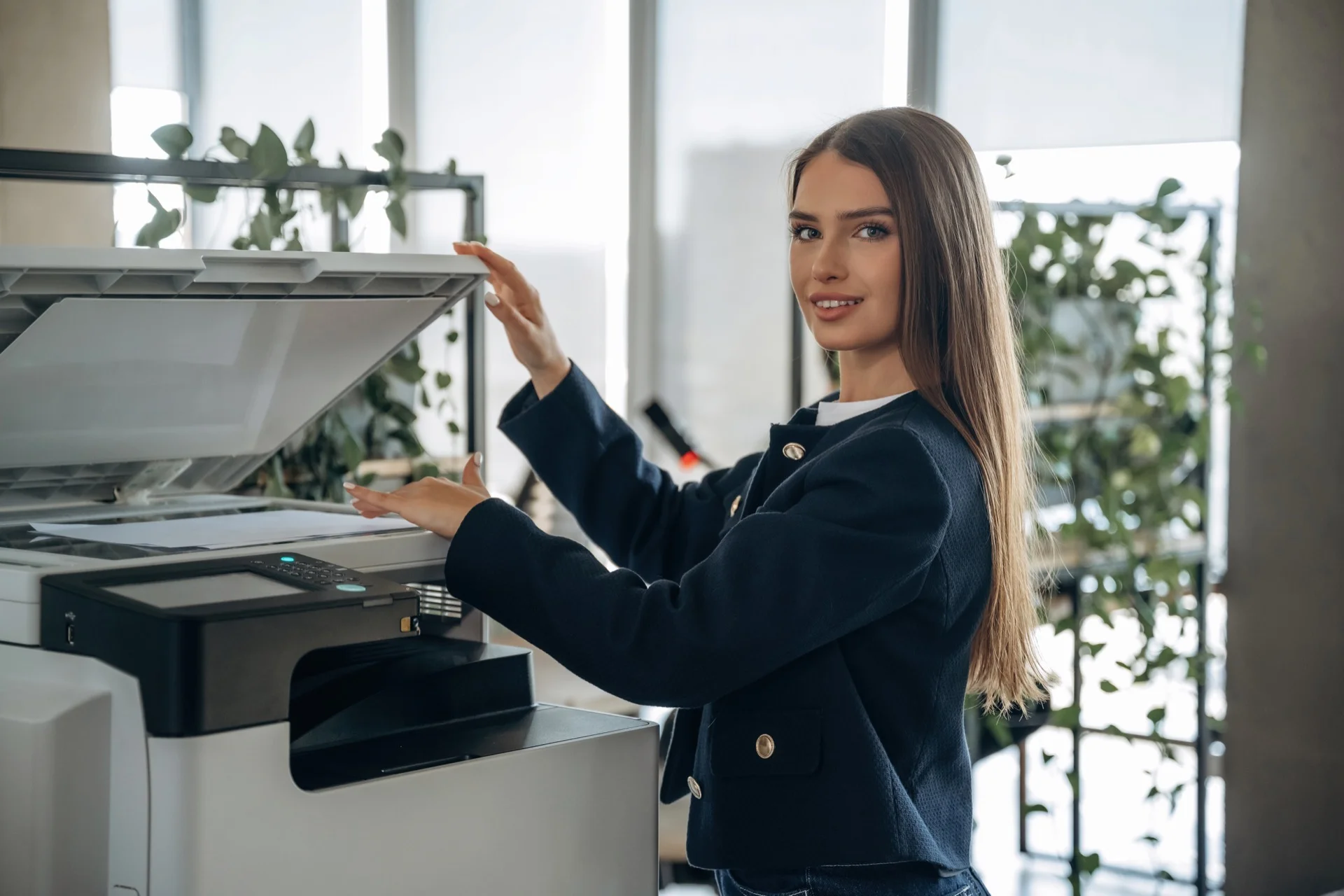
Remote working has become an unavoidable reality for many workers, especially since the COVID-19 pandemic. This way of working, which allows employees to carry out their duties from home, has transformed how we think about work. Companies have had to rapidly adapt to this new dynamic, and employees have discovered the advantages and challenges it entails.
For many, remote working offers unprecedented flexibility, allowing better work-life balance. However, it also raises questions about work organisation, communication and resource management. This evolution also has repercussions on the tools and resources needed to work effectively from home.
Workers must now equip themselves to meet their professional needs whilst taking into account space and budget constraints. In this context, the question of photocopying and home printing becomes crucial. Companies must rethink their approach to document management to ensure their employees have the necessary tools to be productive, even remotely.
Summary
-
Remote working has become a reality for many workers, requiring adaptation to new working conditions.
-
The impact of remote working on paper and ink consumption is significant, with an increase in home printing.
-
Home photocopying needs are rising, whilst office needs are decreasing with remote working.
-
Solutions such as multifunction printers and scanning services are essential to meet the photocopying needs of remote workers.
-
The trend towards document dematerialisation has an impact on photocopying, encouraging companies to rethink their document management practices.
The Impact of Remote Working on Paper and Ink Consumption
With the rise of remote working, paper and ink consumption has experienced notable fluctuations. On one hand, some workers have reduced their use of these resources by opting for digital solutions. Many documents are now shared and signed electronically, which decreases the need for physical printing.
This trend towards dematerialisation is not only beneficial for the environment but also allows companies to achieve significant savings on printing-related costs. However, it is important to note that not all workers adapt to this transition in the same way. Some continue to favour printed documents for reasons of comfort or personal preference.
This can lead to an increase in paper and ink consumption at home, raising questions about the sustainability and efficiency of remote working practices. Companies must therefore find a balance between encouraging the use of digital tools and taking into account the individual needs of their employees.
Home Photocopying Needs Versus Office Needs
Photocopying needs differ considerably between home and office. In the office, photocopiers are often centralised and accessible to all employees, which facilitates the printing and reproduction of documents in large quantities. Companies generally invest in high-performing equipment to meet their teams’ varied needs.
In contrast, at home, workers often have to make do with personal printers that may not be as efficient or suited to high volumes. This disparity can create frustrations for remote workers who need regular photocopies for their professional tasks. Moreover, the lack of access to professional equipment can slow their productivity and affect the quality of their work.
It is therefore essential that companies take these differences into account and consider solutions to support their remote employees, particularly by providing them with adequate resources or allowing them access to external printing services.
Solutions to Meet the Photocopying Needs of Remote Workers
To meet the photocopying needs of remote workers, several solutions can be considered. Firstly, companies can offer subsidies or reimbursements for the purchase of home printing equipment. This would allow employees to invest in quality printers that meet their professional needs whilst reducing costs associated with office printing.
Another solution is to establish partnerships with local or online printing services. These services can offer workers the possibility of printing and photocopying documents without having to invest in costly equipment. Additionally, some companies choose to adopt a hybrid approach, where employees can print at the office certain days of the week whilst working from home on other days.
This would maintain easy access to necessary resources whilst promoting the flexibility of remote working.
The Trend Towards Document Dematerialisation and Its Impact on Photocopying
Document dematerialisation is a growing trend that has a significant impact on photocopying. By digitising documents, companies not only reduce their paper consumption but also improve the efficiency of their internal processes. Digital documents are easier to store, share and find, which simplifies collaborative work and reduces time spent searching for information.
However, this transition to digital does not mean that photocopying will completely disappear. Some documents still require a printed version for legal or practical reasons. Therefore, it is crucial that companies find a balance between dematerialisation and maintaining adequate printing capacity to meet their employees’ specific needs.
This may involve training on available digital tools as well as awareness of the benefits of paper reduction.
Advantages and Disadvantages of Home Photocopying for Companies
Home photocopying presents several advantages for companies, particularly in terms of flexibility and autonomy for employees. By allowing workers to print and photocopy at home, companies foster a more adaptable work environment that can improve employee satisfaction and productivity. Moreover, this can reduce printing-related costs at the office, as fewer resources are needed to manage a centralised printer fleet.
However, there are also disadvantages associated with this practice. Firstly, the initial cost of purchasing printing equipment can be high for employees, which could create inequality between those who can afford these investments and those who cannot. Additionally, the lack of control over resource use can lead to an increase in overall costs for the company if employees print excessively or inefficiently.
It is therefore essential that companies put in place clear policies regarding the use of home printing resources.
New Technologies and Tools to Facilitate Remote Document Management
New technologies play a key role in facilitating remote document management. Tools such as cloud storage platforms allow employees to easily access their files from anywhere, which reduces the need for physical printing. Moreover, document management software offers advanced features for organising, sharing and collaborating on documents without needing to print them.
Electronic signature applications have also become essential in the world of remote working. They allow employees to sign documents legally without needing a paper version, which further contributes to reducing paper consumption. By integrating these technologies into their professional daily life, workers can not only improve their efficiency but also contribute to a more sustainable approach within their company.
Best Practices for Optimising Photocopying Use in Remote Working
To optimise photocopying use in remote working, it is essential to adopt certain best practices. Firstly, it is recommended to encourage the use of digital as much as possible. This includes scanning important documents and using collaborative tools to share information without needing to print.
Next, it is important to establish a clear policy regarding home printing and photocopying. This may include guidelines on what should be printed and what can remain in digital form. Finally, training employees on the efficient use of digital tools and on best practices in printing can help reduce waste whilst ensuring everyone has the necessary resources to work effectively.
In conclusion, remote working has profoundly changed our relationship with work and the resources needed to be productive from home. By taking into account the specific needs related to photocopying and adopting a proactive approach to the challenges posed by this new reality, companies can support their employees whilst fostering a more sustainable and efficient work culture.
Need a Professional Photocopier?
Get free personalised quotes from qualified suppliers in Belgium. Response within 24 hours, no obligation.