The future of copiers: holograms and 3D document printing
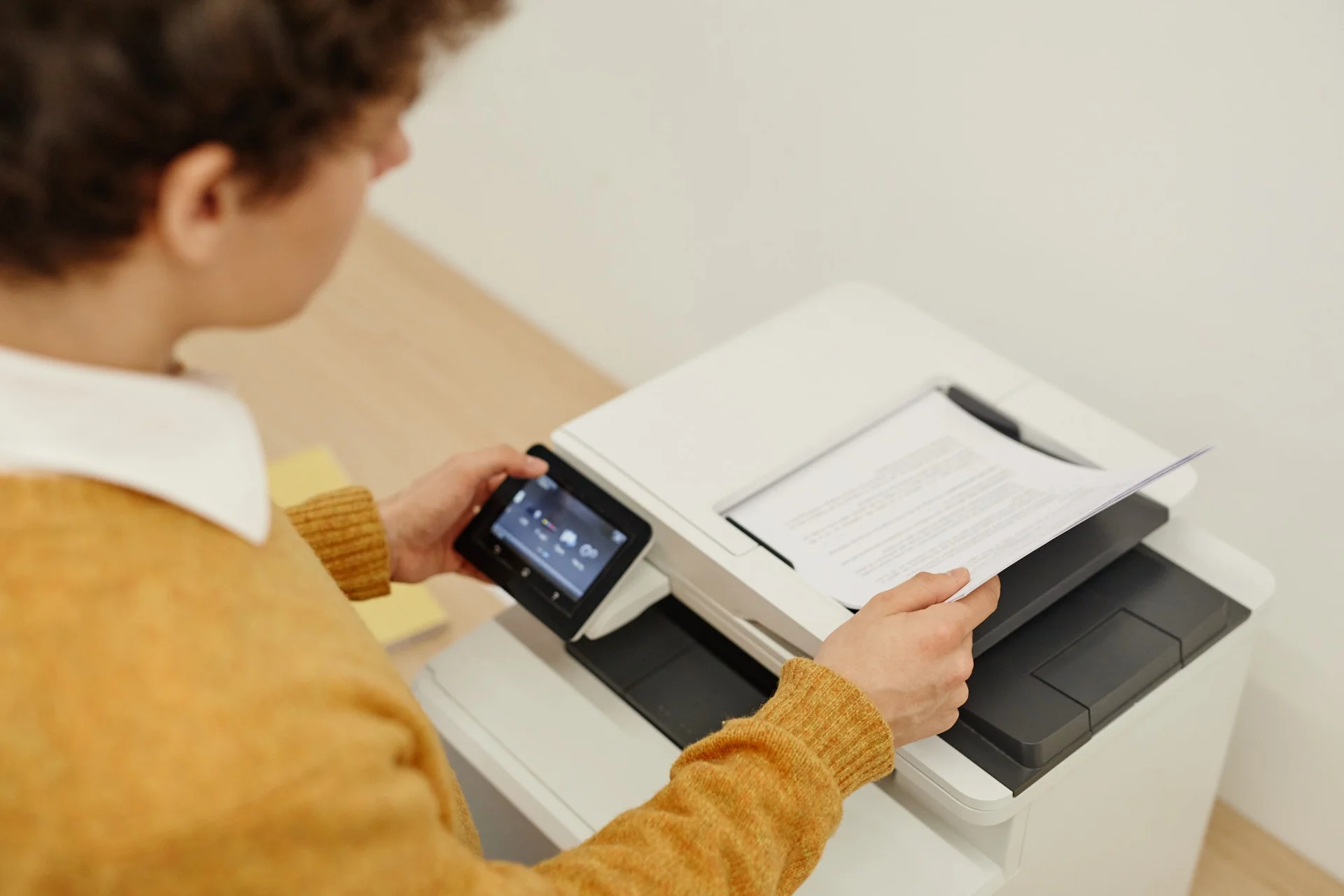
Since their invention, copiers have undergone a remarkable evolution, from simple document reproduction machines to sophisticated devices integrating advanced technologies. Over the decades, these devices have been able to adapt to the growing needs of users, both in professional and personal environments. The rise of computing and digital technologies has also played a crucial role in this transformation, enabling copiers to become multifunctional tools capable of scanning, printing and sending documents in the blink of an eye.
Today, we are witnessing the emergence of new technologies that promise to further redefine the copier landscape. Among these, holograms and 3D printing stand out for their potential to revolutionise the way we reproduce and share information. In this article, we will explore these fascinating innovations and their implications for the future of copiers.
Summary
-
The evolution of copiers has seen major advances with the introduction of holograms and 3D printing.
-
Holograms offer significant advantages in document reproduction, such as security and protection against counterfeiting.
-
3D printing technology brings notable improvements to copiers, particularly in terms of speed and document personalisation.
-
3D document printing opens the way to many potential applications, such as manufacturing spare parts and creating 3D models.
-
Despite its advantages, the use of holograms in copiers presents challenges and limitations, particularly in terms of costs and technical complexity.
The advantages of holograms in document reproduction
Holograms represent a major technological advance in the field of document reproduction. Unlike traditional prints, which can be easily falsified or altered, holograms offer an unmatched level of security. By integrating three-dimensional elements and depth effects, they allow creating authentic documents that are difficult to reproduce.
This is particularly relevant in sectors such as finance or administration, where verification of authenticity is paramount. Moreover, holograms can enrich the user experience by making documents more interactive. For example, a holographic document can contain additional information accessible through simple visual interaction.
This opens the way to more engaging presentations and more effective communication. Businesses can thus stand out by using this technology to present their products or services in an innovative way.
3D printing technology at the service of copiers
3D printing is another innovation that is transforming the copier sector. By enabling the creation of physical objects from digital models, this technology offers unprecedented flexibility. Modern copiers can now integrate 3D printing functionalities, allowing users to produce not only printed documents, but also prototypes, models or even spare parts.
This convergence between photocopying and 3D printing opens new perspectives for businesses and individuals. For example, an architect can 3D print a scaled-down model of a building while having the possibility to print the associated plans. This facilitates the visualisation and understanding of projects, while reducing the time needed to produce physical models.
Moreover, the integration of 3D printing into copiers allows optimising costs and improving operational efficiency.
Potential applications of 3D document printing
The potential applications of 3D printing in the field of document reproduction are vast and varied. In the educational sector, for example, teachers can create interactive teaching materials by 3D printing anatomical or geographical models. This allows students to learn in a more immersive and engaging way, thus promoting a better understanding of complex concepts.
In the medical field, 3D printing can also play a crucial role. Healthcare professionals can print personalised anatomical models to prepare surgical interventions or to explain procedures to their patients. This personalised approach not only improves the quality of care but also strengthens the trust between patient and practitioner.
In short, 3D printing offers a multitude of opportunities to enrich the way we interact with documents and information.
The challenges and limitations of using holograms in copiers
Despite their many advantages, the integration of holograms into copiers is not without challenges. One of the main obstacles lies in the high cost of holographic technology. Producing holograms requires specialised equipment and technical expertise that can represent a considerable investment for businesses.
Moreover, the complexity of the hologram creation process can limit their widespread adoption. Another challenge concerns compatibility with existing systems. Many businesses still use traditional copiers that are not equipped to handle holograms.
This can create a technological divide between those who adopt these new innovations and those who remain anchored in more conventional methods. It is therefore essential that manufacturers work to make this technology more accessible and integrable into existing systems.
The environmental impact of holographic technology and 3D printing
Environmental impact is a crucial aspect to consider when evaluating new technologies, including those related to copiers. On one hand, the use of holograms can reduce the need for traditional paper prints, thus helping to decrease the consumption of natural resources and reduce waste. By offering a more secure and sustainable digital alternative, holograms could play a key role in the transition to a greener economy.
However, it is important to note that 3D printing also presents its own environmental challenges. The materials used for 3D printing may not always be recyclable or biodegradable, which raises concerns about their long-term environmental impact. Moreover, the printing process can consume a significant amount of energy, which can counteract some potential environmental benefits.
It is therefore essential that industry players work to develop sustainable solutions to minimise these impacts.
Future prospects for copiers: towards a technological revolution
The future of copiers looks promising with the continued emergence of innovative technologies such as holograms and 3D printing. These advances could radically transform our way of designing and using these devices on a daily basis. As these technologies become more accessible and affordable, we can expect to see increased adoption across various sectors.
Moreover, the integration of artificial intelligence and machine learning into copiers could also play a determining role in their future evolution. These technologies could allow devices to learn and adapt to users’ specific needs, making their use even more intuitive and efficient. In short, we are on the verge of a true technological revolution that could redefine our relationship with copiers.
Conclusion: the promises and challenges of the future of copiers
In conclusion, the evolution of copiers towards the integration of holograms and 3D printing opens a fascinating field of opportunities for document reproduction. These technologies promise not only to improve the security and interactivity of documents, but also to enrich our daily user experience. However, it is crucial to take into account the challenges associated with their adoption, particularly in terms of cost and environmental impact.
As we move towards a future where these innovations become commonplace, it is essential that businesses and users stay informed about these technological developments. By exploring these new possibilities, we can not only improve our operational efficiency but also contribute to a more sustainable future for all.
A related article to “The future of copiers: holograms and 3D document printing” is How many prints can I make with a professional printer? This article explores the printing capabilities of professional printers and provides tips for maximising their lifespan. It is essential to understand your printer’s limits to optimise your productivity at the office. To learn more about effectively managing your office equipment, also see How to improve your office productivity? and What copier leasing formula to choose to suit your needs?
Do you need a professional copier?
Receive free personalised quotes from qualified suppliers in Belgium. Response within 24 hours, no obligation.