When Should You Replace an Office Copier? 12 Warning Signs for Businesses in Belgium
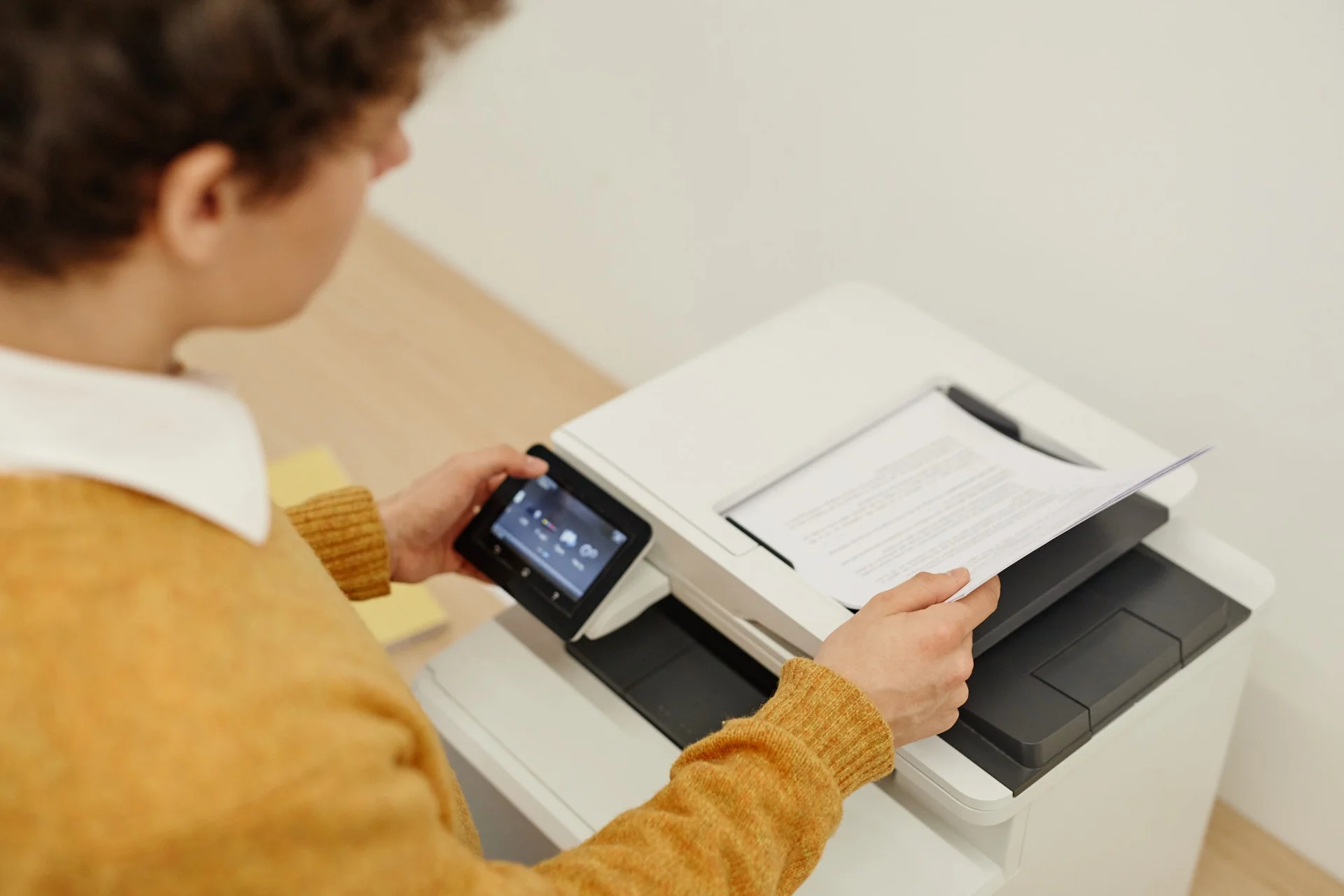
When Should You Replace an Office Copier? 12 Warning Signs for Businesses in Belgium
In many Belgian companies, office copiers stay in service for one simple reason: they still produce pages. As long as paper comes out and the machine has not completely failed, replacement often feels unnecessary. But that is exactly where copier costs become deceptive. An ageing machine rarely hurts only through repair invoices. It also drains time, disrupts teams, creates hidden operating costs and limits the way your business handles documents.
So the real question is not “does it still print?” The real question is: is it still reliable, cost-effective and suited to the way your business works in 2026? Modern companies expect more from a print environment than basic copy and print functions. They need secure release printing, faster scanning, cloud-connected workflows, easier cost control and support for hybrid work.
That is why copier replacement should be treated as a business decision, not just a technical intervention. If you are hesitating between keeping your existing machine alive, extending service, or moving to a newer solution through photocopier rental, this guide will help you decide with a clear framework.
Why copier replacement matters more than most companies think
An old copier can look “fully amortised” on paper while quietly costing the company more every month. The damage usually shows up in areas that do not sit neatly on a single invoice:
- recurring downtime;
- slower document handling;
- weak scan and routing features;
- inconsistent print quality;
- higher energy use;
- growing security exposure;
- user frustration and lost productivity.
That means a copier may still function while already being a poor business asset. Waiting until it fails completely often turns a manageable upgrade into an urgent crisis.
Before signing anything, it is also worth comparing the right financing path. In some cases, buying a photocopier makes sense. In others, photocopier leasing gives the right balance of cash flow and renewal flexibility. And for companies that want service wrapped into a predictable model, rental versus leasing is usually where the best conversation starts.
12 signs it may be time to replace your copier
1. Breakdowns are no longer occasional
The clearest sign is also the most obvious: the copier keeps breaking down. At first, the issues feel minor. Then paper jams become frequent, error messages return, scans fail randomly, the feeder misbehaves, and your team starts developing little workarounds just to get through the day.
Once reliability becomes unpredictable, the problem is no longer a one-off repair issue. It becomes a structural drag on operations. The true cost is not just the technician’s visit; it is the disruption to admin staff, finance teams, HR, sales support and anyone else waiting on the machine.
If the copier can no longer be trusted, replacement should move from “nice to consider” to “serious option”.
2. The machine is too slow for current workflows
A copier can still work while being far too slow for the pace of your organisation. This often happens when a business grows but keeps the same equipment for too long.
Slow warm-up times, laggy touchscreens, delayed scan-to-email workflows, long queues at the device and sluggish multi-page jobs all reduce productivity. In small offices, teams tolerate this longer than they should. In larger environments, however, the cumulative effect becomes expensive.
What used to be acceptable for a five-person office may be a daily bottleneck for twenty users.
3. Print quality has become inconsistent
Streaks, grey backgrounds, faded colours, smudges, poor contrast, alignment issues and unreliable duplex output are all warning signs. Sometimes they are linked to a simple consumable issue. Often, however, they point to broader wear across multiple components.
That matters because output quality reflects directly on your business. Quotes, contracts, customer packs, property sheets, HR documents and internal board files should not look second-rate. This is especially important for customer-facing teams in places such as Brussels, where presentation quality still matters.
If your staff regularly reprint documents or avoid certain jobs because output is unreliable, the copier is probably past its best.
4. Maintenance costs keep rising without adding value
Many businesses continue repairing an ageing copier because each individual repair seems cheaper than replacement. Sometimes that logic is valid. Often it is not.
What matters is not whether one intervention is affordable, but whether ongoing spend still improves business performance. If service calls are becoming more frequent, parts are harder to source, response times are slowing down and your contract is losing value, then your maintenance budget may simply be subsidising an obsolete setup.
This is the point where you should compare the real operating cost of the current device against a modern alternative. Running a full cost comparison helps many companies see that the “cheap old machine” is not actually cheap at all.
5. Your monthly volume has outgrown the device
A copier that was correctly sized years ago can become the wrong fit as your business expands. If the recommended monthly duty cycle is regularly exceeded, wear accelerates. That leads to more jams, more breakdowns, more inconsistent quality and more pressure on every core component.
In that situation, replacement is not only about age. It is about alignment. A machine designed for yesterday’s workload should not be expected to support today’s demand indefinitely.
6. The copier holds back your digital document processes
Modern office copiers are no longer just print engines. They are also scanning hubs, workflow touchpoints and part of the wider document stack. If your current device forces teams to rename files manually, move scans via USB, or follow awkward multi-step processes, then it is slowing down your digital transition.
That problem becomes even clearer in businesses that want faster document handling, better archiving and fewer manual steps. Companies moving in that direction often benefit from stronger cloud solutions and advanced scan features. If document automation matters to you, it is worth looking at what newer devices can do in areas such as smart scanning and OCR.
7. Security features are no longer good enough
Office copiers process sensitive information every day: payroll data, financial records, contracts, customer documents, legal paperwork and internal HR files. Older devices often lack features that companies now expect as standard, including:
- secure release printing by PIN or badge;
- detailed usage logs;
- better access control;
- safer data handling on the device;
- regular firmware support;
- stronger compatibility with current IT policies.
If your organisation has tightened governance, security or compliance expectations, a copier with weak controls becomes a risk rather than an asset.
8. Consumables have become too expensive or harder to source
Sometimes the issue is not the hardware itself, but the ecosystem around it. Toners, drums, maintenance kits and specific spare parts often become more expensive as a model ages. Availability can also worsen.
If your cost per page is climbing and your supplier keeps warning you about parts or supply lead times, it is time to reassess. Many companies find that a clearer contract structure around photocopier rental prices creates far more predictability than keeping an ageing machine on life support.
9. Your business has changed
Perhaps your team has grown. Perhaps you are now operating hybrid work. Perhaps you have opened a second office. Perhaps scanning matters far more than it did three years ago. In all of those situations, your copier may still function while no longer fitting the business.
This is especially common in organisations with several locations or changing internal workflows. In those cases, copier replacement should be considered as part of a wider print strategy rather than a device-by-device reaction. A broader multi-site print strategy often becomes necessary in that situation.
10. Users complain constantly
User complaints are often one of the most accurate signals in the building. If several employees repeatedly say the copier is slowing them down, they are usually right.
Typical complaints include:
- “it jams all the time”;
- “scanning takes forever”;
- “the menus are confusing”;
- “colour output is inconsistent”;
- “we avoid using it unless we really have to”.
These frustrations may sound small, but repeated daily over a year they represent a meaningful productivity loss. A professional copier should simplify work, not create ongoing friction.
11. Your supplier is already mentioning end-of-support issues
When a manufacturer or service partner starts warning you about parts availability, diminishing support, or ageing firmware limitations, take that seriously. Waiting for a critical failure at that point is rarely the smartest approach.
The better move is to prepare a replacement while you still have time to compare offers calmly, define the right capacity and document your needs. If you want to structure that process properly, it helps to start from a copier requirements document for your business in Belgium.
12. You are only postponing replacement out of habit
This is the least technical sign, but often the most honest one. Many companies keep old equipment simply because it is already there, because there are more urgent priorities, or because “it still sort of works”.
A useful thought experiment is simple: if you were equipping the office from scratch today, would you choose this exact machine again? If the answer is no, then replacement is probably overdue.
Repair, extend or replace: how to make the right decision
The smart move is not to replace at the first inconvenience. The smart move is to compare options rationally.
Step 1: calculate your full current cost
Look beyond the visible monthly invoice. Include:
- service contract or ad hoc repairs;
- consumables and replacement parts;
- employee time lost;
- reprints;
- energy consumption;
- downtime;
- workflow limitations.
That broader view gives you the true cost of keeping the current machine.
Step 2: define your next 24 months of needs
Do not size a device for yesterday’s company. Project the next two years instead:
- number of users;
- expected monthly print volume;
- colour versus mono needs;
- scanning intensity;
- secure print requirements;
- hybrid work patterns;
- multi-site complexity.
In many businesses, future scanning and document automation capacity matter more than pure print speed.
Step 3: compare at least three scenarios
Always benchmark:
- keeping the current copier with extended maintenance;
- replacing through rental or leasing;
- purchasing outright.
This prevents decisions based purely on a low headline monthly figure. A slightly higher monthly cost can still be the better business outcome if it removes disruption and lowers total operating cost.
Step 4: choose the right type of device
Sometimes the issue is not just replacing the old copier, but selecting the right category of machine. In some environments, a professional printer may be enough. In others, only a strong multifunction copier will deliver the right result. If you are unsure, compare photocopier versus business printer before deciding.
Step 5: plan rollout properly
A successful replacement is not just about hardware delivery. It also includes:
- network setup;
- scan configuration;
- access rights;
- user onboarding;
- security settings;
- transition support.
A well-executed rollout produces value within weeks. A rushed replacement often keeps the same user pain points under a new shell.
At what age should you start questioning a copier?
There is no universal rule. In practice, many businesses start asking serious replacement questions between year five and year seven, sometimes earlier if usage is heavy or the original sizing was poor.
But age alone is not enough. A four-year-old copier can already be the wrong fit if the business has expanded significantly. A seven-year-old device can still be serviceable if usage is light, maintenance is solid and functionality remains aligned.
That is why age should always be judged alongside four other criteria:
- reliability;
- total cost;
- functional suitability;
- security and support.
What budget should Belgian companies expect?
Budget depends on print volume, paper format, colour needs, finishing options, service levels and financing model. A compact A4 device for light use sits in a completely different bracket from an A3 multifunction system serving a busy admin floor.
The key point is this: the cheapest visible option is not always the most economical one. The best decision is usually the solution with the strongest balance of reliability, service, usability and predictable monthly cost.
Common mistakes when replacing a copier
Choosing on price alone
A low monthly figure says nothing about service responsiveness, ease of scanning, security features or the quality of support.
Undersizing to save money
A device that is too small will quickly recreate the same problems you were trying to solve.
Ignoring real workflows
If your teams mostly need scanning and document routing, but you compare machines only on print speed, you are using the wrong decision criteria.
Failing to negotiate the contract
Intervention times, included volumes, renewal conditions, upgrade flexibility and exit terms matter. If you are approaching a replacement, it is also worth reviewing your contract terms carefully before you sign.
Should you replace the entire fleet at once?
Not necessarily. For some organisations, a phased replacement plan is smarter, especially when one central machine is the major bottleneck while others remain acceptable.
The important thing is to avoid making isolated decisions without a wider view of the fleet. Even if you replace only one device today, think about the future structure of scanning, security, user management and support across the business.
Conclusion: the right moment is before the critical failure
An office copier does not need to be completely dead before replacement becomes the best option. Once breakdowns repeat, costs rise, workflows slow down or security falls behind, waiting longer is rarely the cheapest path.
The best timing is when you can still compare offers calmly, define your requirements properly and choose a solution that matches the way your business in Belgium actually operates. Put simply: it is better to replace at the right time than to suffer a breakdown at the worst possible moment.
If you already recognise several of the warning signs in this guide, now is probably the right moment to review your current total cost and compare a more modern alternative.
📍 Service available in: Brussels