Analogue or Digital Photocopier?
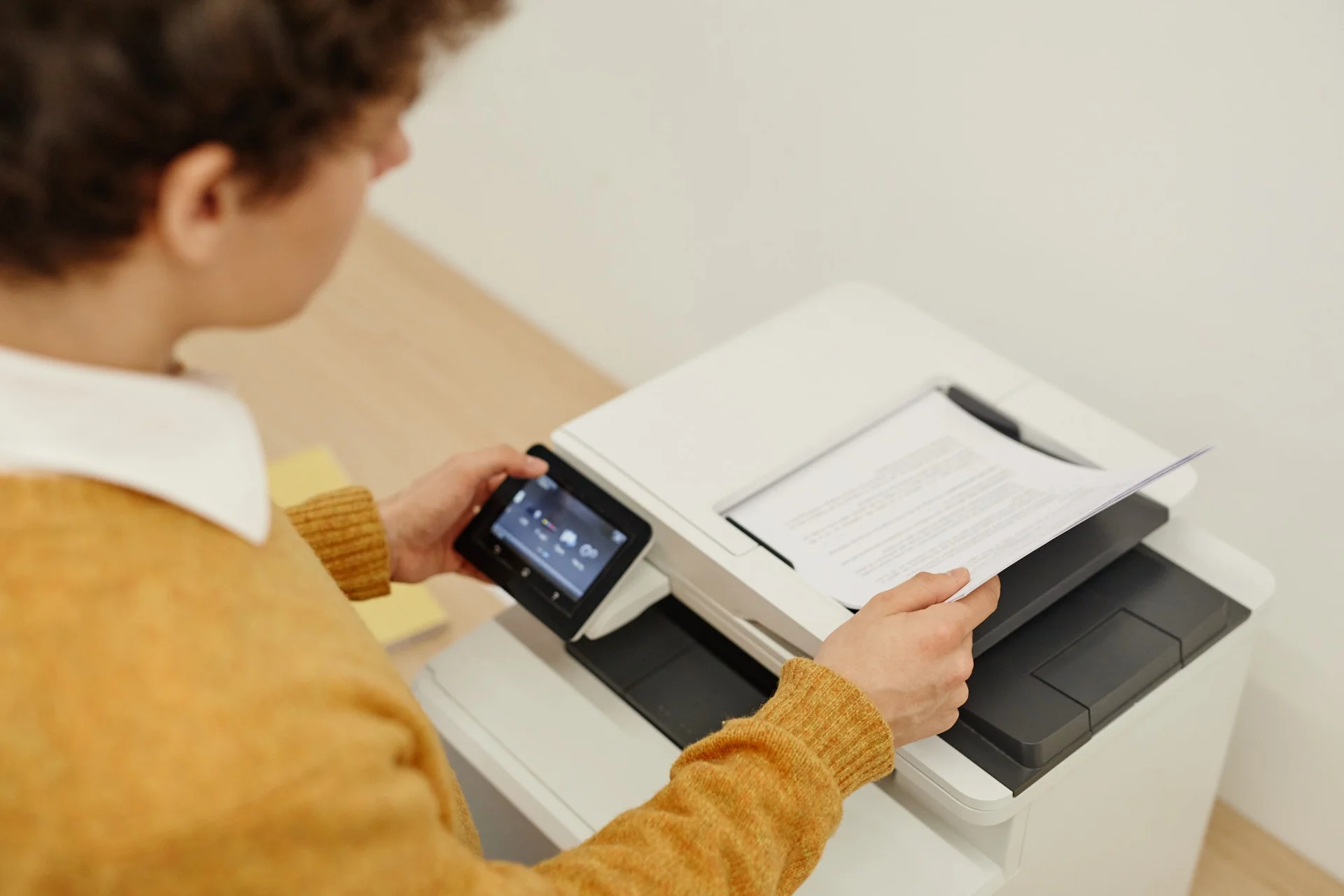
In the modern world, photocopying has become an essential activity for many businesses, institutions, and individuals. Photocopiers, whether analogue or digital, play a crucial role in document reproduction. However, these two types of machines present distinct characteristics that influence their use and efficiency.
Analogue photocopiers, which pioneered document reproduction, work on mechanical and optical principles, whilst digital photocopiers, more recent, rely on advanced electronic technologies. This fundamental distinction leads to notable differences in terms of image quality, speed, cost, and environmental impact.
Technological evolution has allowed digital photocopiers to surpass their analogue counterparts in many areas. However, analogue photocopiers continue to have their place in certain market niches. This article will examine the characteristics, advantages, and disadvantages of each type of photocopier, as well as their operating costs and environmental impact. Ultimately, it will help businesses determine which type of photocopier best meets their specific needs.
Summary
-
Analogue photocopiers use traditional reproduction processes, whilst digital photocopiers use digital technology to reproduce documents.
-
Analogue photocopiers work by using mirrors and lenses to project the image onto a photosensitive drum, whilst digital photocopiers use a scanner to digitise the document and reproduce it using toner.
-
Analogue photocopiers are generally cheaper to purchase, but they have higher operating costs due to the need to regularly replace mechanical parts.
-
Digital photocopiers offer better image quality, greater versatility, and greater ease of use, but they are generally more expensive to purchase.
-
In terms of operating and maintenance costs, digital photocopiers are generally more economical in the long term due to their increased efficiency and reliability.
Operation and Characteristics of Analogue Photocopiers
Analogue photocopiers work according to a principle based on light and static electricity. When a document is placed on the photocopier glass, a light source illuminates the document. The reflected light is then captured by a set of lenses that project it onto a photosensitive drum.
This drum is electrically charged and attracts toner particles that correspond to dark areas of the document. Once the toner is deposited on the drum, it is transferred onto paper by pressure and heat, thus producing a copy of the original document.
Analogue photocopier characteristics generally include image quality that can vary depending on the condition of internal components and the quality of toner used. These machines are often slower than their digital counterparts, with copying speeds ranging from a few pages per minute to about thirty, depending on the model. Moreover, analogue photocopiers are often bulkier and require regular maintenance to ensure proper operation. Their mechanical design also implies an increased risk of breakdowns, which can lead to workflow interruptions.
Advantages and Disadvantages of Analogue Photocopiers
Analogue photocopiers present several advantages that can make them attractive for certain businesses. First and foremost, their initial cost is generally lower than that of digital photocopiers. For small businesses or those needing only occasional use, this can represent significant savings. Moreover, these machines are often simpler to use, with fewer complex features that may require additional staff training.
However, the disadvantages of analogue photocopiers are also notable. Their image quality can be inferior to that of digital models, especially when reproducing documents with fine details or colour images. Moreover, copying speed is often a limiting factor in an office environment where document processing volume is high. Maintenance costs can also accumulate over time, as these machines require regular maintenance to avoid frequent breakdowns.
Operation and Characteristics of Digital Photocopiers
Digital photocopiers represent a significant technological advance compared to analogue models. They use a digital process to capture and reproduce images. When a document is scanned, it is converted into a digital file that can be processed by the printer.
This process enables superior image quality thanks to higher resolution and better colour management. Digital photocopiers can also print directly from a computer or network, which offers increased flexibility.
Digital photocopier characteristics often include advanced features such as scanning to email, automatic duplex printing, and the ability to create multipage documents in a single pass. Moreover, these machines are generally faster than analogue models, with speeds reaching several dozen pages per minute. Most digital photocopiers are also equipped with intuitive touch screens that facilitate their use and allow users to customise their print options.
Advantages and Disadvantages of Digital Photocopiers
The advantages of digital photocopiers are numerous and varied. First and foremost, print quality is often superior to that of analogue models, making them an ideal choice for businesses needing to reproduce documents with precision and clarity. Moreover, printing speed allows high document volumes to be processed in little time, which is essential in a dynamic professional environment.
However, digital photocopiers are not without disadvantages. Their initial cost can be high, which can represent an obstacle for some small businesses. Moreover, although these machines are generally reliable, they may require regular software updates and specialised maintenance to maintain optimal performance. Finally, the increasing complexity of features can sometimes be confusing for users unfamiliar with technology.
Comparison of Operating and Maintenance Costs
Initial Costs and Maintenance
Analogue photocopiers tend to have lower initial costs, but their maintenance costs can increase over time due to the need to regularly replace worn mechanical parts and toner.**
Energy Efficiency and Long-Term Costs
Moreover, their energy efficiency is often inferior to that of digital models, which can lead to higher electricity bills.** On the other hand, digital photocopiers often offer better energy efficiency and reduced cost per printed page thanks to their ability to manage multiple tasks simultaneously.
Advantages of Digital Photocopiers
Maintenance costs can also be lower in the long term considering the increased durability and reliability of these modern machines. Moreover, the ability to print directly from a computer or network can reduce the need for additional purchases such as separate scanners or printers.
Environmental Impact: Analogue vs Digital Photocopier
The environmental impact of photocopiers has become a growing concern in the current context of sustainability and ecological responsibility. Analogue photocopiers generally consume more energy due to their complex mechanical operation and can produce more waste due to toner and worn parts that must be frequently replaced. Moreover, their printing process can generate more paper waste considering their tendency to produce less precise copies.
In contrast, digital photocopiers are often designed with increased energy efficiency and use fewer resources to produce a copy. Many modern models also integrate ecological features such as automatic duplex printing to reduce paper consumption. Moreover, some manufacturers offer recycling programmes for used toner and spare parts, thus contributing to minimising overall environmental impact.
Conclusion: Which Type of Photocopier to Choose for Your Business?
The choice between an analogue and digital photocopier largely depends on each business’s specific needs. For those needing an economical solution for occasional or limited use, an analogue photocopier may suffice. In contrast, for businesses processing high document volumes or requiring superior print quality, a digital photocopier would probably be the best choice.
It is essential to evaluate not only initial cost but also long-term operating costs as well as environmental impact when choosing a photocopier. By considering these factors, businesses can make an informed decision that meets their needs whilst respecting their ecological and economic values.
Need a Professional Photocopier?
Get free personalised quotes from qualified suppliers in Belgium. Response within 24 hours, no obligation.