The History of Patents in the Photocopier Industry
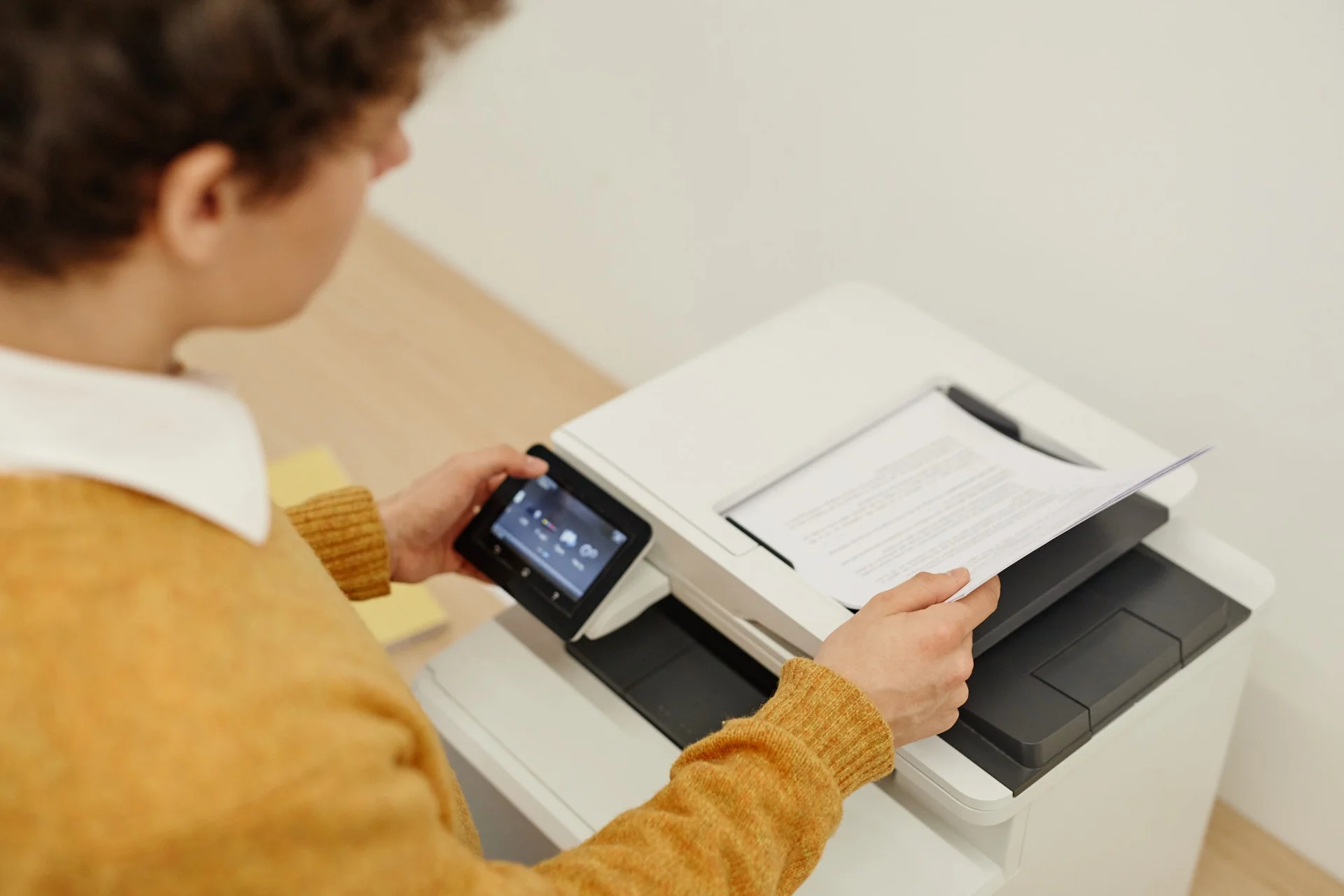
The photocopier industry emerged in the mid-20th century, at a time when demand for fast and efficient document reproduction was expanding. Before the invention of photocopying, duplication methods were laborious and often unreliable. Businesses and institutions primarily used typewriters and manual duplicators, which required considerable effort to produce copies.
It was in this context that the first innovations in photocopying began to emerge, radically transforming the way documents were reproduced. One of the first milestones in this industry was the invention of electrostatic photocopying by Chester Carlson in 1938. His invention, which he called “Xerography”, paved the way for a new era of document reproduction.
Carlson understood that static electricity could be used to transfer ink onto paper, thus enabling copies to be created almost instantaneously. This discovery aroused considerable interest and led to the creation of the Xerox company, which would become a major player in the photocopying field.
Summary
-
The beginnings of the photocopier industry were marked by the invention of the first machine to reproduce documents.
-
The emergence of the first patents in the photocopying field helped protect technological innovations and stimulate competition between inventors.
-
Major technological advances in the photocopier industry were supported by the importance of patents, which encouraged investment in research and development.
-
The main players in the photocopier industry obtained emblematic patents for revolutionary technologies, strengthening their market position.
-
Litigation and legal battles around patents in the photocopier industry have often reflected fierce competition between companies to protect their innovations.
The Emergence of Early Patents in the Photocopying Field
With the rise of the photocopier industry, patents began to play a crucial role in protecting innovations. The first patents related to photocopying were filed in the 1940s and 1950s, marking the beginning of a race for innovation. These patents enabled inventors and businesses to protect their ideas and technologies, whilst stimulating research and development in this expanding sector.
The most emblematic patent of this period is undoubtedly the one filed by Chester Carlson himself, which protected his electrostatic photocopying method. This patent not only enabled Carlson to secure his rights over his invention but also paved the way for other businesses to develop similar technologies. Thus, patents became an essential tool for encouraging innovation whilst ensuring inventors could financially benefit from their creations.
Major Technological Advances and the Importance of Patents
Over the decades, the photocopier industry has experienced significant technological advances, each accompanied by new patents. Innovations such as colour photocopying, multifunction machines, and digital systems have transformed the photocopying landscape. These advances have not only improved the quality of copies produced but have also expanded the possibilities for using photocopiers in various sectors, from offices to educational establishments.
Patents play a fundamental role in this dynamic of innovation. By protecting new technologies, they encourage businesses to invest in research and development. For example, patents related to digital technologies have enabled businesses to focus on improving machine performance and efficiency, whilst ensuring their innovations are not copied without compensation.
This has led to healthy competition in the sector, thus promoting continuous improvement of products available on the market.
Main Players and Their Emblematic Patents
The photocopier industry is dominated by several major players, each having filed emblematic patents that have shaped the sector. Xerox, for example, is often considered the pioneer of modern photocopying thanks to its numerous innovations and patents. The company not only commercialised the first commercial photocopier in 1959 but also filed patents on key technologies such as toner and automatic feed systems.
Other companies, such as Canon and Ricoh, have also played a significant role in the industry’s evolution. Canon introduced inkjet photocopiers that revolutionised the market, whilst Ricoh was at the forefront of developing multifunction machines integrating printing, scanning, and fax. Each of these companies has protected its innovations through patents, thus enabling them to stand out in a competitive market.
Litigation and Legal Battles Around Patents in the Photocopier Industry
The importance of patents in the photocopier industry has also led to a series of litigation and legal battles. Companies often dispute rights over similar technologies or innovations that seem to overlap. These conflicts can be costly and lengthy, but they are also revealing of the crucial importance patents hold for sector players.
A notable example is the litigation between Xerox and Canon in the 1980s, where Xerox accused Canon of violating several of its patents. This type of conflict highlights not only the financial stakes linked to patents but also their role as an innovation driver. Indeed, these legal battles often encourage companies to innovate further to stand out and avoid potential violations.
The Evolution of Regulations and Patent Laws in the Photocopying Sector
Over time, regulations and laws concerning patents have evolved to adapt to the new technological and economic realities of the photocopying sector. Governments have recognised the importance of patents for encouraging innovation and protecting inventors’ rights. This has led to harmonisation of patent laws at the international level, thus facilitating the filing and protection of inventions across borders.
However, this evolution has not been without challenges. Questions related to patent protection duration, originality criteria, and granting procedures are often debated within legislative bodies. Sector players must therefore remain vigilant regarding regulatory changes that could affect their ability to protect their innovations.
The Impact of Patents on Innovation and Competition in the Photocopier Industry
Patents have a significant impact on innovation and competition in the photocopier industry. By protecting inventions, they encourage businesses to invest in research and development, knowing they can benefit from a return on investment through their protected innovations. This creates an environment conducive to the emergence of new technologies and continuous product improvement.
However, there is also a downside to this coin. In some cases, an excessive concentration of patents in the hands of a few large companies can hinder innovation by limiting access to essential technologies for new market entrants. This raises questions about the balance between copyright protection and encouraging healthy competition.
Current and Future Trends in Patents in the Photocopying Field
Today, the photocopier industry faces several trends that could influence the future of patents in this field. One of the major trends is the increasing digitisation of documents and the shift towards cloud-based solutions. This poses new challenges in terms of copyright protection, as technologies evolve rapidly and require constant adaptation of patent laws.
Moreover, with the emergence of innovative technology companies entering the traditional photocopying market, it is likely we will witness a diversification of business models and a redefinition of intellectual property standards. Established players will need to adapt to remain competitive whilst continuing to protect their innovations through new patents suited to modern market realities. In conclusion, the photocopier industry is a dynamic field where patents play a central role in encouraging innovation and protecting copyright.
As we move towards a digital future, it will be essential for sector companies to evolve with these changes whilst continuing to value their inventions through adequate protection.
The article “The History of Patents in the Photocopier Industry” explores the evolution of patents and their impact on technological development in the photocopying field. A related article that might interest readers is The Impact of Digitisation on the World of Professional Printing. This article examines how digitisation has transformed the printing industry, a subject that complements well the history of patented innovations in photocopying.
Need a Professional Photocopier?
Get free personalised quotes from qualified suppliers in Belgium. Response within 24 hours, no obligation.