How to Optimise High-Volume Document Printing
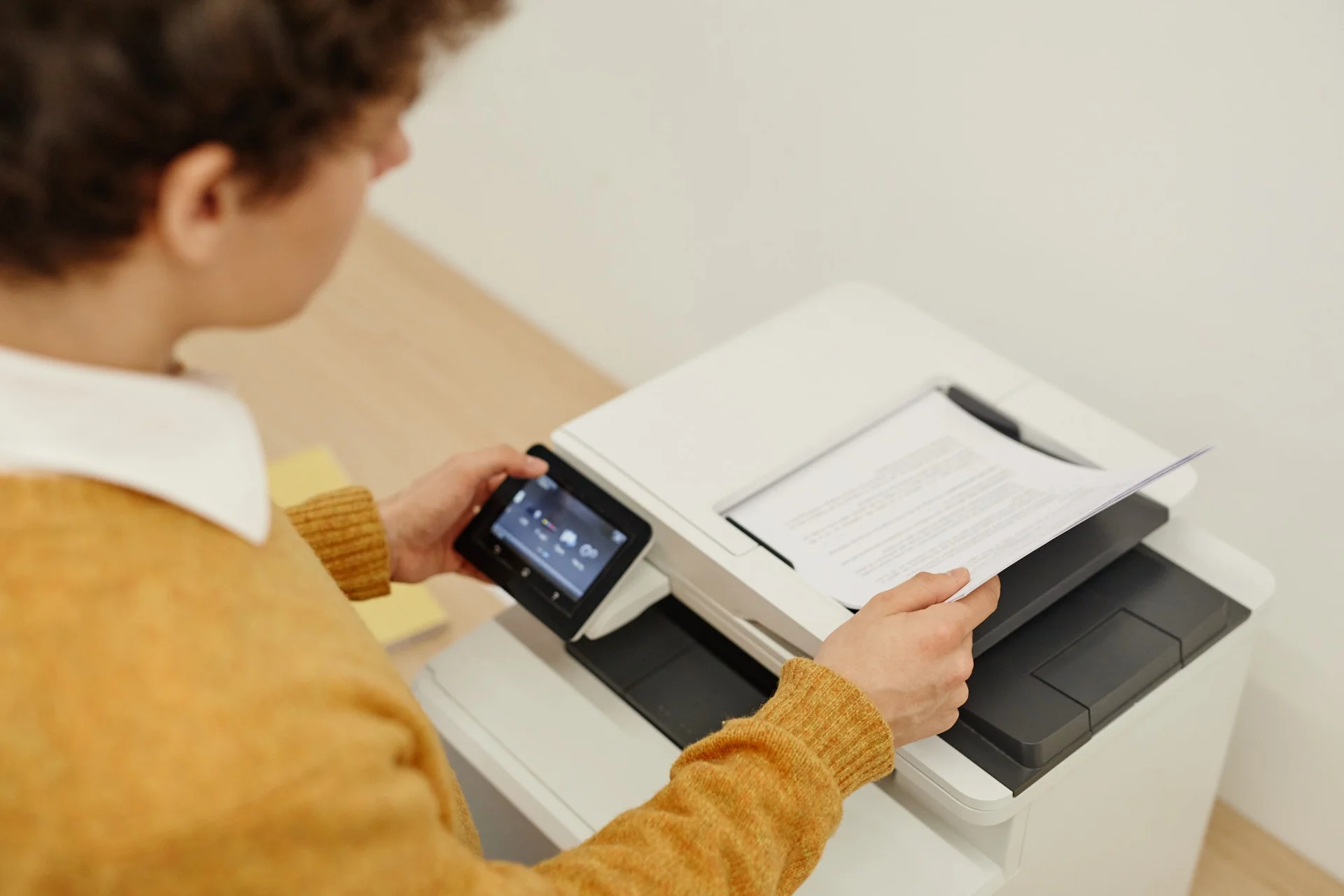
High-volume printing presents specific challenges: cost per page, machine reliability, paper management, environmental impact. Whether you print 50,000 or 500,000 pages per month, here are the keys to optimisation.
When does “high volume” start?
| Monthly volume | Category | Equipment type |
|---|---|---|
| 0 - 5,000 pages | Low | Desktop printer |
| 5,000 - 20,000 pages | Medium | Office multifunction |
| 20,000 - 100,000 pages | High | Departmental copier |
| 100,000+ pages | Very high | Production system |
Your equipment must match your volumes. A machine used beyond its capacity wears out faster and costs more.
Optimise cost per page
Understanding cost composition
Cost per page breaks down into:
| Component | % of cost | Optimisation lever |
|---|---|---|
| Toner | 50-60% | Quality, colour policy |
| Paper | 15-25% | Weight, duplex |
| Maintenance | 10-15% | Preventive maintenance |
| Energy | 5-10% | Standby, programming |
| Amortisation | 5-10% | Appropriate sizing |
Strategies to reduce toner cost
1. B&W default
Colour costs 5 to 10x more than B&W. Configure B&W as default on all workstations.
2. “Draft” mode for internals
Draft or eco mode uses 30-50% less toner for acceptable quality.
3. Adapted coverage
Full page coverage costs more. Favour light designs when possible.
4. Generic vs original
Good quality compatible toners can reduce cost by 30-50%. But beware of quality and impacts on warranty.
Paper savings
Duplex systematically
Enabling duplex by default reduces consumption by up to 50%.
Appropriate weight
- 70-75g/m²: for high-volume internal drafts
- 80g/m²: standard documents
- 90-100g/m²: important documents, contracts
Avoid waste
- Print preview
- “N-up” mode (2 or 4 pages per sheet)
- “Print selection” rather than entire document
Choose appropriate equipment
Production characteristics
For high volumes, look for:
Speed: Minimum 50 ppm, ideally 60-80+ ppm for very high volumes.
Duty cycle: The manufacturer indicates the maximum monthly capacity. Never exceed 80% of this capacity continuously.
Paper capacity: Minimum 2,000 sheets, ideally 4,000-6,000 to avoid frequent reloading.
Robustness: Industrial construction, components designed for intensive use.
Recommended brands for high volumes
- Konica Minolta bizhub Pro: solid reputation
- Canon imageRUNNER ADVANCE: reliability
- Ricoh Pro: excellent for production
- Xerox AltaLink/PrimeLink: robust, complete
Consider production equipment
For 100,000+ pages/month, light production systems offer:
- Speeds of 80-120+ ppm
- Professional finishing (stapling, booklets, etc.)
- Exceptional reliability
- Very low cost per page
Automate workflows
Central print server
A print server allows:
- Queue centralisation
- Automatic routing to the right printer
- Prioritisation of urgent jobs
- Statistics and reports
Automated rules
Configure rules such as:
- Documents > 10 pages → duplex
- Documents > 50 pages → high-capacity printer
- Colour documents → manager approval
- External documents → quality printer
Print management software
Solutions like PaperCut, Equitrac or uniFLOW offer:
- User authentication
- Quotas
- Tracking and reporting
- Secure printing
Manage paper flow
Storage
- Dry location: humidity is the enemy
- Room temperature: 18-24°C ideal
- Keep in ream packaging: until use
- Avoid direct light: yellows paper
Loading
- Aerate sheets: before loading to avoid double-feeding
- Don’t overfill trays: respect maximum capacity
- Use guides: well adjusted for format
Logistics
For very high volumes:
- Negotiate large quantities with your paper supplier
- Plan delivery schedule
- Allocate dedicated storage space
- Track consumption for anticipation
Maintenance for volumes
Reinforced preventive maintenance
At high volumes, maintenance is crucial:
- Monthly inspections: cleaning, adjustments
- Proactive part replacement: before failure
- Stock of critical spare parts: on-site
Track indicators
Monitor:
- Jam rate: increase = alert
- Quality: degradation = cleaning needed
- Error codes: recurring = investigation
Immediate reactivity
For high volumes, every hour of breakdown counts. Ensure:
- Premium maintenance contract (4h SLA)
- Direct technical contact
- Backup equipment procedure
Environmental optimisation
Energy
- Standby mode: configure auto-activation after X minutes
- Scheduled on/off: during non-working hours
- Energy-efficient equipment: look for Energy Star, Blue Angel labels
Toner
- Dedicated recycling: many brands take back used cartridges
- High-capacity consumables: less packaging, fewer changes
Paper
- Certified paper: FSC, PEFC
- Recycled paper: for internal drafts
- Waste reduction: via duplex, draft mode
Calculate your real TCO
Comprehensive cost formula
Monthly TCO = Amortisation + Consumables + Maintenance + Energy + Paper + Administration
Calculation example
Configuration: A3 colour copier, 50,000 pages/month (70% B&W, 30% colour)
| Item | Monthly cost |
|---|---|
| Leasing (60 months) | €200 |
| Toner B&W (35,000 p.) | €175 |
| Toner colour (15,000 p.) | €300 |
| Maintenance (included) | €0 |
| Paper | €150 |
| Energy | €30 |
| Total | €855/month |
Cost per page: €855 ÷ 50,000 = €0.017/page
Outsource or internalise?
When to outsource
Consider outsourcing if:
- Occasional very large volumes
- Specific requirements (binding, special paper)
- No space for large equipment
- Need for maximum flexibility
When to internalise
Stay internal if:
- Regular predictable volumes
- Document confidentiality
- Need for quick turnarounds
- Long-term cost optimisation desired
Hybrid model
Many companies combine:
- Internal: current volumes, urgent documents
- External: peaks, special finishing
Checklist for high volumes
- Equipment sized for 80% of monthly maximum
- Minimum speed 50 ppm
- Paper capacity 2,000+ sheets
- Duplex as default
- B&W as default
- Premium maintenance contract
- Print management software
- Staff trained on best practices
- Regular TCO monitoring
Need a high-capacity professional copier?
Get free personalised quotes from qualified suppliers in Belgium. Response within 24h, no obligation.